
Disclosure: this guide contains partner links. If you book through them, we may earn a commission at no extra cost to you. We rank options by price, conditions and convenience, not by commission. How we handle partner links
Japan is one of the easiest countries to travel in, which is exactly why most first-time visitors never think about what they would do if something went wrong. Then a child spikes a fever at 2 a.m., a wallet goes missing on the train, or an earthquake alert goes off in a language you cannot read, and the questions all come at once: who do I call, will they speak English, and how do I call at all from a travel eSIM?
This guide gives you the numbers worth saving, what to say on a 119 call, how the police and lost-and-found system works, what to do in an earthquake, and how medical bills work. Everything is taken from JNTO, the Japan Tourism Agency, the Fire and Disaster Management Agency, the Tokyo Metropolitan Government and the Tokyo Metropolitan Police Department, checked on October 5, 2026.
Emergency numbers to save before you land
You only need two emergency numbers, 110 and 119, plus one English-language helpline. Save them in your phone today, along with your hotel’s phone number and your embassy, because the moment you need them is the worst moment to search.
| When | Number | Good to know |
|---|---|---|
| Crime, theft, traffic accident happening now | 110 (police) | From mobiles, landlines and public phones; public phones need no coins |
| Ambulance, serious illness or injury, fire | 119 (fire and ambulance) | From mobiles, landlines and public phones; the ambulance service is available to anyone in Japan |
| Help in English, Chinese or Korean: illness, accidents, disasters, tourist questions | 050-3816-2787 (Japan Visitor Hotline, JNTO) | 24 hours, every day; from a non-Japanese number dial +81-50-3816-2787 |
| Police advice that is not an emergency (Tokyo) | 03-3501-0110 (Tokyo police consultation) | English helpline 24 hours, according to JNTO; normal call charges |
| Lost property in Tokyo | 0570-550-142 (Tokyo police Lost and Found Center) | Phone line 8:30 to 17:15 |
| Mental health support (English) | 03-5774-0992 (TELL Lifeline) | Mon to Thu 9:00 to 23:00, Fri to Sun 9:00 to 2:00 |
Know what the hotline does and does not do. The Japan Tourism Agency says the Japan Visitor Hotline handles direct calls from visitors, including introductions to medical institutions that can see you in a foreign language, but as a general rule it does not run three-way interpretation or make bookings for you (JTA). So call 110 or 119 first in a real emergency, and use the hotline for “where do I go and what do I do” questions.
How to call an ambulance (119)
Dial 119, say “kyūkyū desu” (medical emergency), then answer five questions: where, what happened, how old the patient is, and your name and phone number. The Fire and Disaster Management Agency lists the questions in that order (FDMA), so preparing the address before you dial is the single most useful thing you can do.
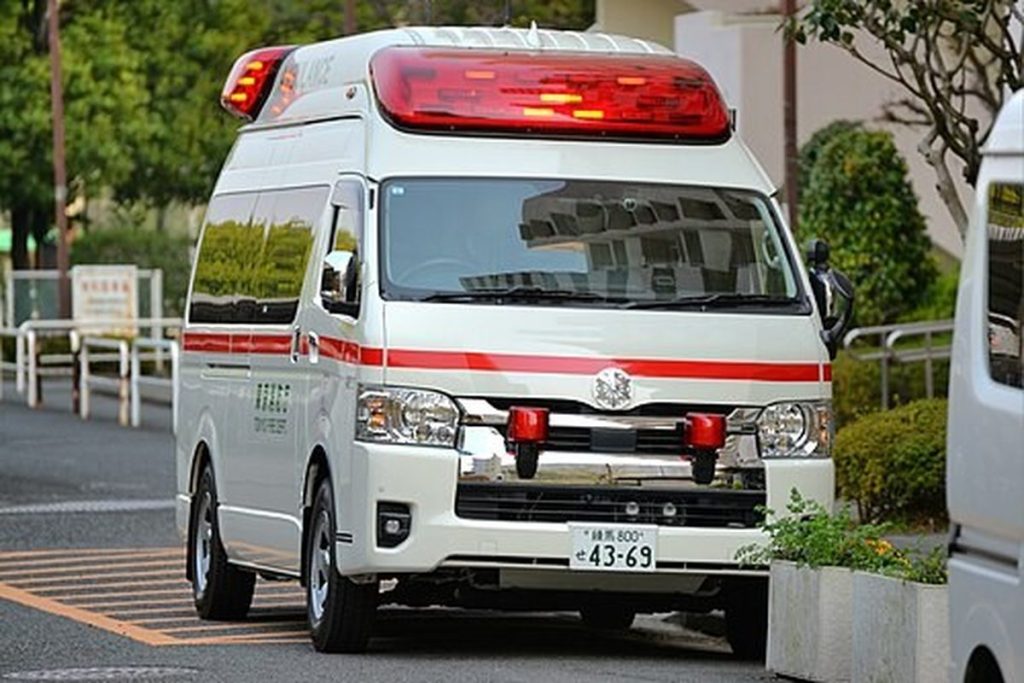
- 1. Type of emergency. The dispatcher answers “119, fire or medical emergency?” (kaji desu ka, kyūkyū desu ka). Say “kyūkyū desu” for an ambulance.
- 2. Location. Give the address. If you do not know it, describe a nearby building or intersection. Your hotel key card or booking confirmation usually shows the address.
- 3. Symptoms. What happened and when it started.
- 4. Age. The patient’s age, or an estimate.
- 5. Name and contact number, so the crew can call you back after you hang up.
Language support depends on the city. The Tokyo Metropolitan Government says 119 calls from foreign callers in Tokyo get three-way interpretation in English, Chinese, Korean, Portuguese and Spanish (Tokyo Metropolitan Government). Anywhere in Japan, the FDMA’s advice is to ask a Japanese speaker nearby to help, and the Japan Tourism Agency suggests showing them this sentence: 救急車を呼んでください。 (“Please call an ambulance.”) (JTA).
When you call, the FDMA suggests having your passport, cash or a credit card (to pay at the hospital) and your current medication ready (FDMA). You cannot choose which hospital the ambulance takes you to (JTA). Not sure whether it is serious enough for an ambulance? In Tokyo, the Tokyo Emergency Medical Guide from the Tokyo Fire Department helps you decide between calling 119 and going to a clinic yourself.
Police, koban and lost items
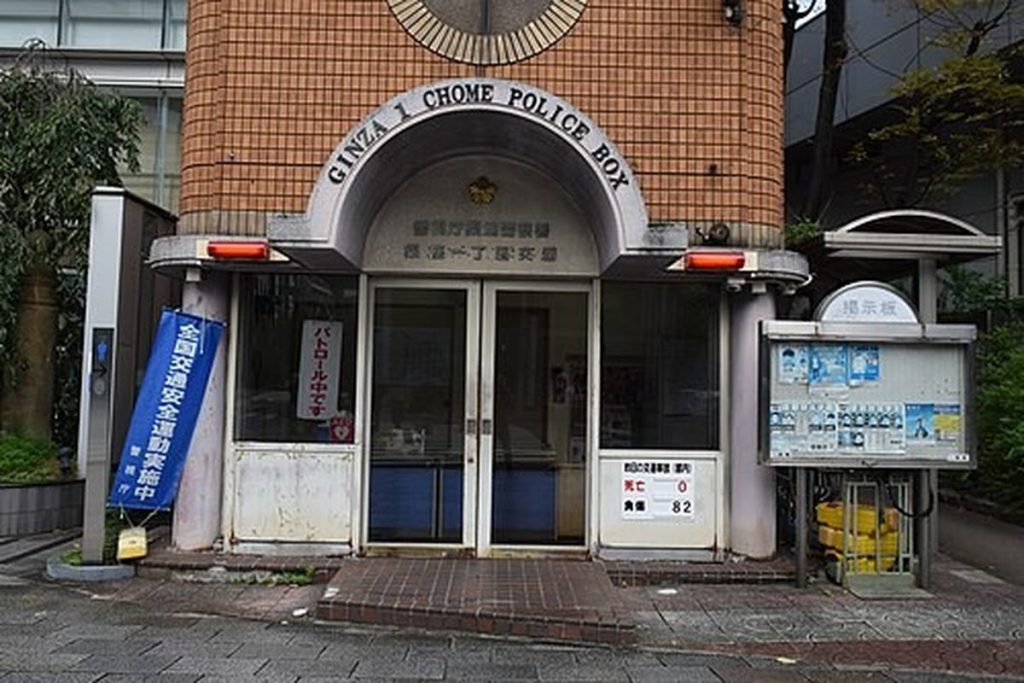
For anything happening right now, dial 110; for everything else, walk into the nearest koban. JNTO describes the koban, the small police boxes found throughout Japanese neighbourhoods, as the place to go when you need help, and suggests asking anyone if you cannot find one (JNTO).
- Theft or loss you need to claim on insurance: you will need a police report, which a local police station can create. If you are in a hotel, JNTO suggests asking the front desk to help (JNTO).
- Lost property: file a Lost Property Report at a koban or police station. Tokyo police will contact you if your item turns up, but they ask for a Japanese phone number and as a rule do not make international calls (Tokyo police).
- Left it on a train, bus or plane: also ask the railway, bus company or airline, which may keep items for a few days before passing them to the police (Tokyo police).
- Lost cards or phone: contact your card issuer or mobile carrier at once to block misuse (Tokyo police).
- Lost passport: contact your embassy or consulate first and ask whether you need a police certificate to have it reissued (Tokyo police). Japan’s Ministry of Foreign Affairs keeps a list of foreign embassies in Japan.
The Japanese-number rule is where travellers get stuck. If you only have a data eSIM, ask your hotel whether you can give its phone number on the report, and note the report number and the police station name so you can follow up in person or through the hotel. Keep a photo or copy of your passport separately from the original, as JNTO recommends, so the embassy step goes faster.
Calling for help without a Japanese phone number
Most travel eSIMs are data-only, so they give you internet but no Japanese phone number for normal calls. That is fine for maps and messaging, but it means you should decide in advance how you would make a voice call in an emergency, rather than finding out at the worst moment.
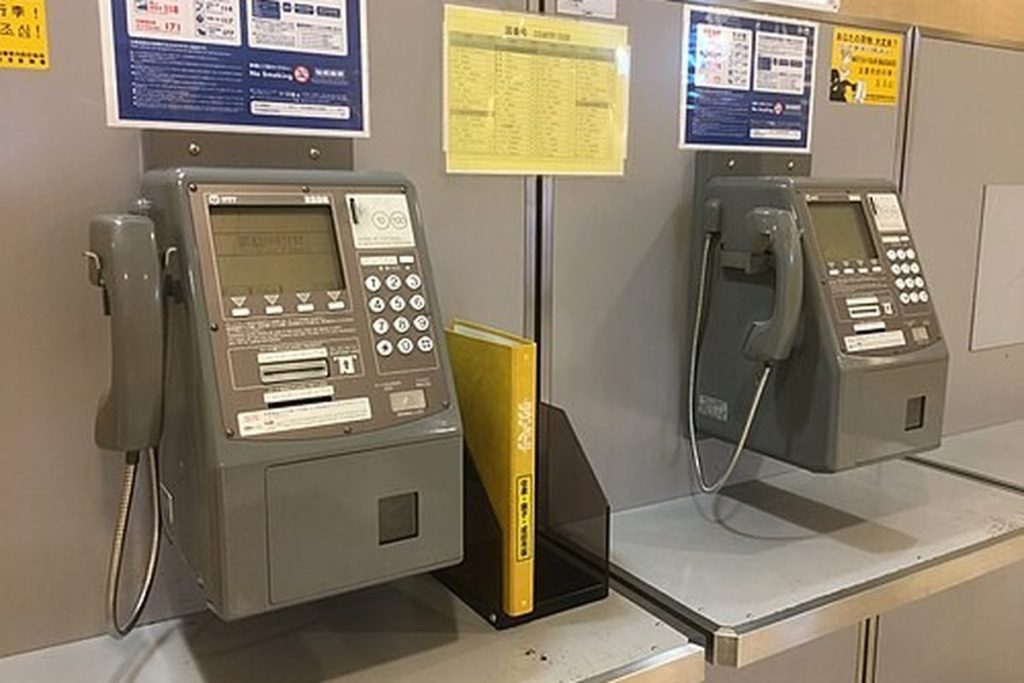
- Public phones: NTT East says emergency calls such as 110 and 119 from public phones need no coins or card. Lift the handset and dial; on phones with a red emergency button, press it first (NTT East, Japanese). You will still find them at airports, large stations and many public buildings.
- Your hotel: the front desk can call 119 or a taxi to a hospital for you. Keep the hotel’s number and address in your phone.
- Your home SIM: if you keep your home SIM active with roaming for voice, you have a normal phone line. Check your carrier’s roaming rates before you fly.
- People around you: station staff, shop staff and passers-by will call for you if you ask. Showing “救急車を呼んでください” (please call an ambulance) is enough.
Choosing connectivity now? Our Japan eSIM guide explains when an eSIM, a pocket Wi-Fi or a plan with a phone number makes more sense.
Earthquakes, tsunami and other disasters
Install JNTO’s free Safety Tips app before you go: it sends earthquake early warnings, tsunami warnings and weather alerts in 15 languages. Disaster alerts in Japan arrive fast and in Japanese, so the app is what turns a loud alarm into an instruction you can act on (JNTO Safety Tips).
- At check-in: check where the evacuation routes are so you know where to go (JNTO).
- During a strong quake indoors: stay calm, follow staff instructions and put out any open flame, because fire is the most dangerous secondary disaster (JNTO).
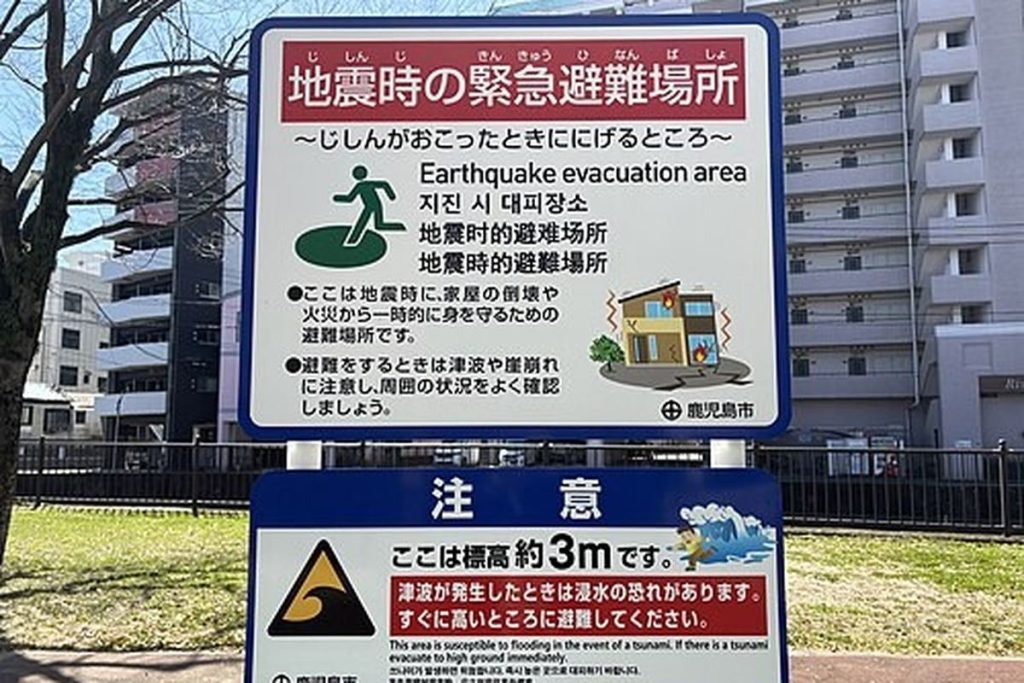
- Near the coast: after a large earthquake, head for higher ground in case of a tsunami (JNTO). Green evacuation signs like the one above, and street signs showing the height above sea level, tell you where to go.
- Stay informed: keep your phone charged and follow NHK WORLD-JAPAN for news in English; JNTO also points to the Safety Tips app’s evacuation flowchart if you are unsure what to do (JNTO).
A small power bank matters more than any app here: alerts, maps and translation all stop working when your battery does.
Seeing a doctor and paying for it
For minor problems go to a pharmacy or a clinic during the day; emergency hospitals are open 24 hours. Expect to pay at the end of the visit, often in cash: the Japan Tourism Agency says card payment is accepted at major hospitals, while clinics generally take cash only (JTA).
- Which door: a pharmacy or drugstore if you do not need a doctor; a clinic or general hospital in regular hours; an emergency hospital or after-hours reception at night (JTA).
- Finding one that speaks your language: use the medical institution search on the Japan Tourism Agency medical guide, or ask the Japan Visitor Hotline.
- Cost: you can ask at reception for an estimate before treatment. Visitors without insurance may be charged the full amount, and the agency warns that medical costs during a trip can become very high, citing cases involving surgery, long hospital stays and a flight home (JTA).
- Insurance: the agency and JNTO both advise buying travel insurance before you leave; some policies can be bought after arriving in Japan (JTA).
The practical point: insurance is less about the bill itself than about who handles it. A policy with a 24-hour assistance line can find a hospital, arrange payment and deal with the language barrier while you deal with the illness. If you are comparing policies, look at SafetyWing or EKTA (new bookings and payments suspended since October 8, 2026) (partner links), and check medical cover, the emergency assistance number and whether they pay hospitals directly. Our what to book before your Japan trip guide covers insurance alongside your other pre-trip decisions.
Emergency checklist before you fly
Five minutes of preparation covers almost every scenario above.
- Save 110, 119 and the Japan Visitor Hotline (050-3816-2787) in your phone.
- Save your hotel’s address and phone number, in Japanese if possible.
- Note your embassy’s address and phone number in Japan.
- Photograph your passport and keep a copy separate from the original.
- Install the JNTO Safety Tips app and allow notifications.
- Decide how you would make a voice call: home SIM roaming, the hotel phone or a public phone.
- Buy travel insurance and save its 24-hour assistance number.
- Pack your regular medication, a power bank and some cash for a clinic visit.
More pre-trip prep: our arrival checklist, Visit Japan Web steps and how much cash to carry.
Frequently asked questions
What is the emergency number in Japan?
Dial 110 for the police and 119 for an ambulance or the fire department. Both can be called from mobiles, landlines and public phones, and public phones need no coins for them.
Is there an English emergency hotline in Japan?
JNTO’s Japan Visitor Hotline, 050-3816-2787, answers in English, Chinese and Korean 24 hours a day for illness, accidents, disasters and general questions. In a life-threatening emergency, call 119 or 110 first.
Do 119 operators speak English?
In Tokyo, 119 calls from foreign callers can use three-way interpretation in English, Chinese, Korean, Portuguese and Spanish, according to the Tokyo Metropolitan Government. Elsewhere, ask a Japanese speaker nearby to help or show them “救急車を呼んでください”.
What should I do if I lose my passport in Japan?
Contact your embassy or consulate, ask whether you need a police certificate, and file a report at a koban or police station. A copy or photo of your passport makes the process faster.
Can I go to a hospital in Japan without insurance?
Yes, but you may be charged the full cost, and many clinics take cash only. Ask at reception for an estimate. Travel insurance bought before departure is strongly recommended by the Japan Tourism Agency.
How we checked: official sources
- JNTO: Japan Visitor Hotline and emergency numbers
- JNTO: emergencies (koban, embassy, earthquakes, helplines)
- Japan Tourism Agency: guide for when you are feeling ill
- Fire and Disaster Management Agency: ambulance usage guide (PDF)
- Tokyo Metropolitan Government: how to call an ambulance and Tokyo Fire Department: Tokyo Emergency Medical Guide
- Tokyo Metropolitan Police Department (English), if you’ve lost something, Lost and Found Center and consultation hotlines (Japanese)
- NTT East: how to make emergency calls from public phones (Japanese)
- JNTO: Safety Tips app
- Ministry of Foreign Affairs: foreign missions in Japan
Last checked against these sources on October 5, 2026 (JST). Phone numbers and service hours can change; confirm on the official pages before you travel.
Editorial information
- Written by
- Mahalohana
- Published
- Updated
- Last verified
Sources
- Japan Visitor Hotline — JNTO
- Emergencies — JNTO
- Guide for when you are feeling ill — Japan Tourism Agency
- Ambulance usage guide — Fire and Disaster Management Agency
- How to call an ambulance — Tokyo Metropolitan Government
- Tokyo Emergency Medical Guide — Tokyo Fire Department
- If you've lost something — Tokyo Metropolitan Police Department
- Consultation hotlines — Tokyo Metropolitan Police Department
- Public phones: emergency calls — NTT East
- Safety Tips app — JNTO