
Disclosure: this guide contains partner links. If you book through them, we may earn a commission at no extra cost to you. We rank options by price, conditions and convenience, not by commission. How we handle partner links
Japan has a reputation as a cash country, and first-time visitors often arrive either with a thick envelope of yen or with nothing but a card. Neither works well. In 2026 the big cities are mostly cashless, but cash still matters at exactly the small, local moments that make a trip: a shrine visit, a ramen counter, a bus into the hills.
This guide shows where cards, IC cards and QR codes work, where you still need yen, which ATMs accept your card, and how much cash to actually carry. ATM rules come from Seven Bank and Japan Post Bank, IC card rules from JR East and PASMO, and the cashless figures from Japan’s Ministry of Economy, Trade and Industry and JNTO, checked on October 5, 2026.
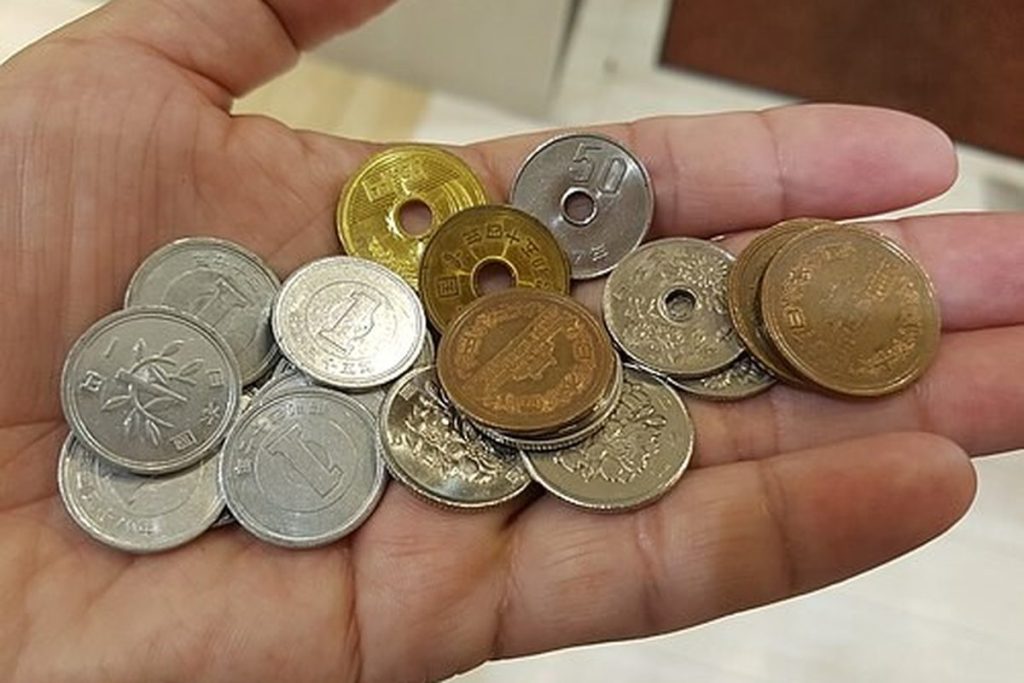
Is Japan still a cash-only country in 2026?
No, but it is not card-only either. Japan’s Ministry of Economy, Trade and Industry (METI) calculated that 58.0% of consumer spending was cashless in 2025, mostly by credit card (METI). Read the other way round, a large share of payments is still made in cash, and JNTO warns that many places, especially in rural areas, accept only cash, “even hotels” (JNTO).
For a visitor, that means cards handle the big items with no fuss, but you will meet a “cash only” moment most days, usually for something small. The aim is not to choose cash or card; it is to carry the right small amount of cash so a cash-only place never decides your plans for you.
Where cards, IC cards and QR codes work
In cities, a card or IC card works almost everywhere you spend serious money; cash becomes necessary as places get smaller, older or more rural. Use the table as a quick map, then check the logos at the entrance or the register, which JNTO notes is how shops show what they accept.
| Where | Card (Visa, Mastercard, JCB…) | IC card (Suica, PASMO…) | Cash |
|---|---|---|---|
| Hotels, department stores, big shopping centres | Yes, generally | Sometimes | Yes |
| Convenience stores | Yes | Yes | Yes |
| Chain restaurants and cafés | Usually | Often | Yes |
| Small family-run restaurants, izakaya, market stalls | Sometimes | Sometimes | Often the only option |
| Shrines and temples (offerings, amulets, small entry fees) | Rarely | Rarely | Expected |
| City trains, subways and buses | Osaka Metro gates take contactless cards; elsewhere usually no | Yes | Paper tickets from machines |
| Shinkansen and N’EX tickets | Yes, at machines and online | Some online bookings can be linked to it | Yes |
| Rural buses and local lines | Rarely | Not on every network | Often needed |
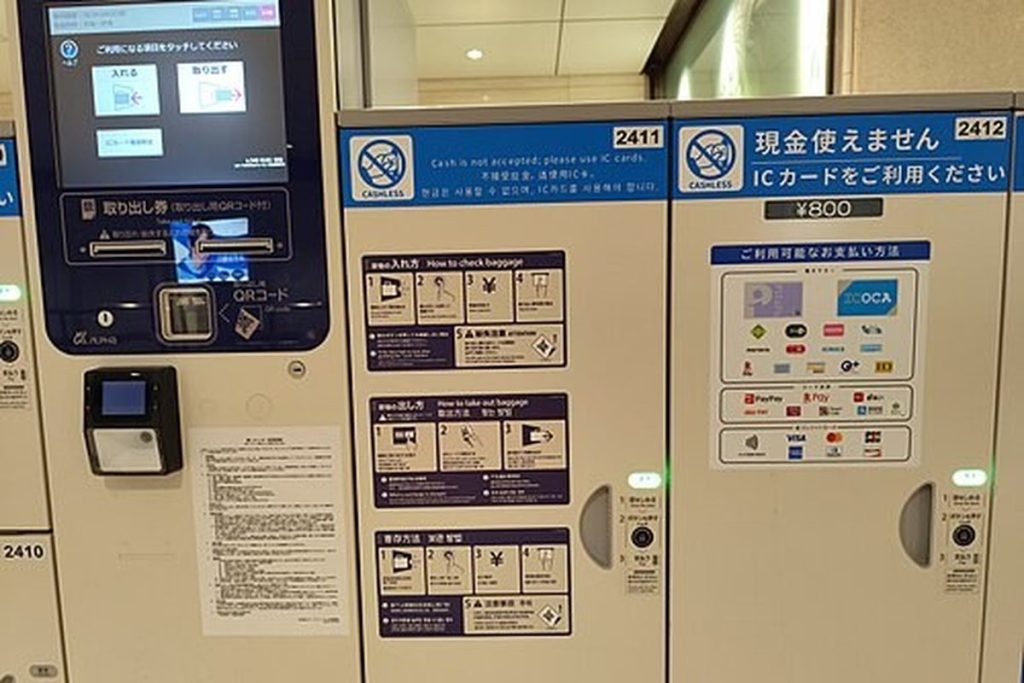
| Station coin lockers | On newer models | Newer models (some are cashless only) | Older models: ¥100 coins |
| Clinics and small hospitals | Major hospitals only | No | Clinics: generally cash |
Two lines in that table surprise people. JNTO notes that you can pay for Narita Express and Shinkansen fares by card, but not always for short train and subway rides (JNTO), which is why an IC card matters more than your credit card for getting around a city. And the Japan Tourism Agency’s medical guide says card payment is accepted only at major hospitals, while clinics generally take cash only (JTA).
Where you still need cash
Shrines and temples, small eateries, rural transport, older lockers and small clinics are the usual cash-only stops, and they need small notes and coins, not big amounts. That is the key insight: the risk is not running out of money, it is holding only a ¥10,000 note when the offering box, the bus or the ticket machine wants coins.
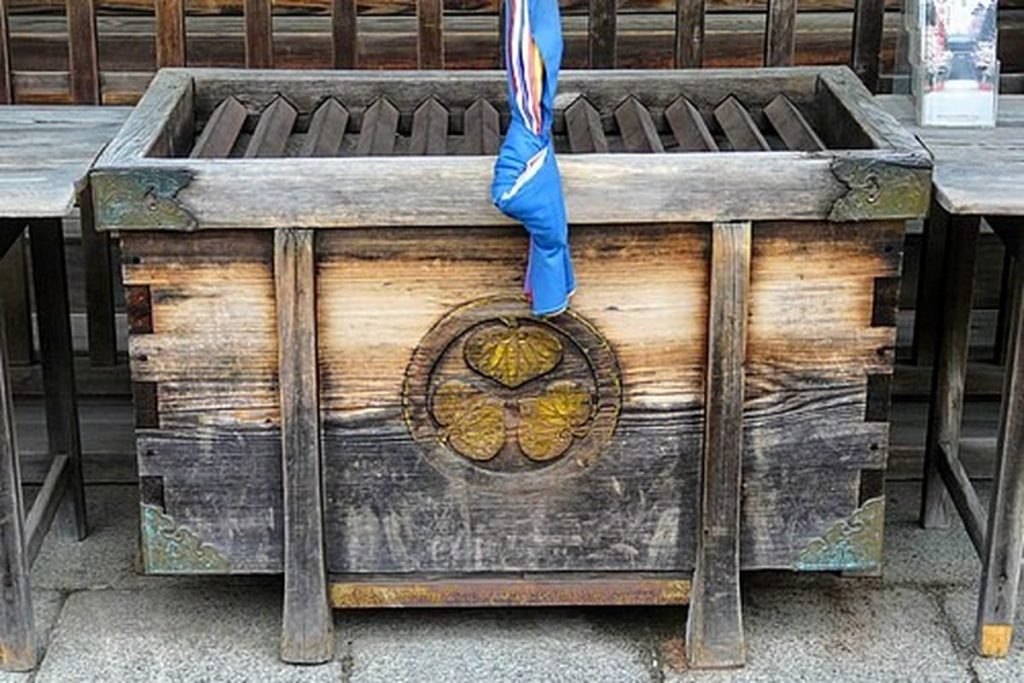
- Shrines and temples. The standard prayer starts with a coin in the offertory box (JNTO). Amulets, prayer plaques and smaller temples’ entry fees are also commonly paid in cash.
- Small restaurants and ticket machines. Many ramen and soba shops sell meal tickets from a machine by the door. Newer machines take IC cards or QR payments, older ones only notes and coins, so check before you queue.
- Rural buses and local railways. PASMO notes that IC cards are not accepted on every train and bus network in Japan (PASMO). Carry coins and ¥1,000 notes for the fare box.
- Countryside hotels and ryokan. JNTO advises checking with accommodation before travelling to rural or remote areas and preparing some cash (JNTO).
- Topping up a physical IC card. JR East says only yen can be used to top up a Welcome Suica; a credit card cannot (JR East). The same goes for card-type IC cards at station machines, as JNTO notes (JNTO).
- Clinics. If you fall ill, expect to pay in cash at a small clinic unless your travel insurance offers cashless treatment (Japan Tourism Agency).
ATMs that take foreign cards
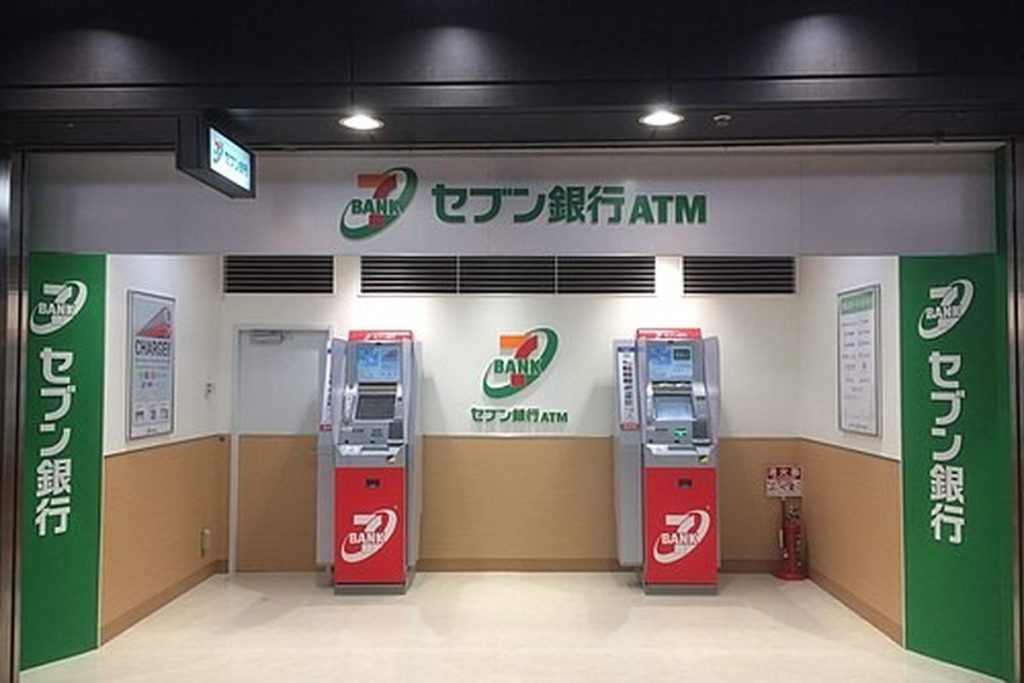
Use a Seven Bank ATM (in 7-Eleven stores and at major airports) or a Japan Post Bank ATM (mostly in post offices). Both accept Visa and Mastercard and several other networks issued abroad. Seven Bank is the easier default because its ATMs are open around the clock and there are over 28,000 of them (Seven Bank).
| Seven Bank ATM | Japan Post Bank ATM | |
|---|---|---|
| Where | 7-Eleven stores, plus airports including Narita, Haneda, Kansai, Chubu, New Chitose, Fukuoka and Naha | Post offices, plus some stations and supermarkets; compact ATMs in some FamilyMart stores |
| Cards issued abroad | Visa, Mastercard, UnionPay, American Express, JCB, Discover, Diners Club | Visa, PLUS, Mastercard, Maestro, Cirrus, JCB, UnionPay, Discover |
| Hours | Visa and Mastercard 24 hours; other brands about 00:10 to 23:50 (varies slightly by brand) | Depend on the location; post office ATMs typically 7:00 to 23:00 (to 21:00 on Sundays and holidays) |
| Limit per withdrawal | ¥100,000 (¥30,000 for magnetic-stripe transactions) | ¥50,000 |
| ATM fee | Varies by card brand, charged per transaction | May be ¥220 per withdrawal for some cards |
| Languages | 12 languages including English, on screen and receipt | English available |
Because fees are charged per withdrawal, on both the Japanese side and often by your own bank, it pays to take out a few larger amounts rather than ¥5,000 at a time. Check your card’s foreign withdrawal fee before you fly, and turn on overseas cash withdrawals if your bank requires it.
At a Seven Bank ATM, a Visa or Mastercard withdrawal ends with a choice of currency. If you pick your home currency, the amount in that currency is fixed at the ATM; if you pick yen, the amount in your currency is set later when your card issuer bills you (Seven Bank). Compare the rate on screen with your bank’s published rate; if you cannot tell, choosing yen keeps the conversion with your own bank.
IC cards and phone wallets: the cash you don’t have to count
Get an IC card on day one for trains, buses, convenience stores and lockers, and treat it as your small-change wallet. It removes most coin-counting from the trip, but remember it is prepaid: a physical card is topped up with cash, and the tourist versions do not refund what is left. Our IC card guide compares every option in detail.
- Welcome Suica (card): sold at Narita and Haneda (Monorail) stations and major JR East stations for ¥1,000 to ¥10,000, no deposit, valid 28 days, no refund of the balance. Top up with yen at station machines or at a Seven Bank ATM (JR East).
- TOURIST PASMO (card): sold at Haneda by Keikyu (¥1,000 to ¥10,000; the ticket machines accept credit cards) and at Narita by Keisei (¥2,000). No deposit, valid 28 days, no refund (PASMO).
- Welcome Suica Mobile (iPhone): issues a Suica in Apple Wallet that stays valid for 180 days and can be topped up with a card registered in Apple Pay, so no cash is needed for top-ups (JR East). Most Android phones bought outside Japan cannot use mobile Suica, so plan on a physical card.
- Contactless bank cards on Osaka Metro: you can tap a contactless Visa, Mastercard, JCB, American Express, Diners Club, Discover or UnionPay card at dedicated gate readers with no registration. Only the adult fare applies, even for children (Osaka Metro).
QR code payments are common in Japanese shops, led by PayPay. If you use a wallet linked through Alipay+, such as Alipay, WeChat Pay, Kakao Pay, NAVER Pay, Toss, GCash, Touch ’n Go or TrueMoney, PayPay says you can pay at its merchants that have signed up for overseas wallets: 35 services from 17 countries and regions as of June 2026 (PayPay). Not every PayPay shop has, so ask or try before you order. JNTO also warns that wallets such as Apple Pay and Google Pay sometimes cannot be used in Japan (JNTO).
Phone payments and Welcome Suica Mobile need mobile data the moment you land. If you have not sorted that yet, compare options in our Japan eSIM guide, or check Airalo’s Japan eSIM (partner link).
How much cash should you carry?
Start with about ¥10,000 to ¥20,000 per person from an airport ATM, then refill when you drop below about ¥5,000. These are our rule-of-thumb amounts, not official figures: enough to cover a day of cash-only stops without hunting for an ATM, small enough that losing your wallet is not a disaster.
| Your trip | Cash to carry per person | Why |
|---|---|---|
| City trip (Tokyo, Osaka), you pay by card and IC card | About ¥10,000 | Covers offerings, a small restaurant, lockers and an IC top-up |
| Temples, markets and back-street food (Kyoto, Nara, Asakusa) | About ¥15,000 to ¥20,000 | More small cash-only payments in a day |
| Countryside, onsen towns, rural buses | Enough for the stay, or confirm card payment with the inn first | Card acceptance is least predictable here |
| Family with children | Add a few thousand yen per child | More small purchases: snacks, drinks, lockers, souvenirs |
Keep a mix of ¥1,000 notes and coins rather than only ¥10,000 notes. A ¥10,000 note is generally accepted even for a small purchase (JNTO), so the easiest way to break one is a convenience store before you head somewhere rural. And there is no reason to arrive with a large stack of yen: JNTO notes that more than ¥1 million in cash must be declared at customs (JNTO).
Common money mistakes first-timers make
Most money problems in Japan come from the wrong kind of payment, not from a lack of money. These are the ones that catch first-timers most often.
- Planning to top up a Welcome Suica card with a credit card. Station machines take yen only. Keep ¥1,000 notes for top-ups, or use Welcome Suica Mobile on an iPhone.
- Loading too much onto a tourist IC card. Welcome Suica and TOURIST PASMO balances are not refunded. Load ¥2,000 to ¥3,000 and top up as you go.
- Counting on Apple Pay or Google Pay with a foreign card. They sometimes fail in Japan, so always have a physical card and some cash as a backup.
- Arriving at a rural inn or bus stop with no yen. Withdraw cash in the city before you go; ATMs are farther apart in the countryside.
- Choosing the ATM conversion without checking the rate. If you are unsure, choose yen and let your bank convert.
- Worrying about the new banknotes. New ¥10,000, ¥5,000 and ¥1,000 notes have been issued since July 3, 2024; the older designs remain valid, so you may get both (Bank of Japan).
Shopping a lot? From November 1, 2026, tax-free purchases work differently: you pay the tax at the till and get it back at departure. See how the new tax-free refund works before you plan big purchases.
Money checklist before you fly
Ten minutes before departure saves most of the hassle above.
- Tell your bank you are travelling and check its foreign transaction and ATM fees.
- Pack two cards from different networks (for example Visa and Mastercard), kept in different places.
- Note the overseas phone numbers of your card issuers, separately from the cards.
- iPhone: install Welcome Suica Mobile, or plan to buy Welcome Suica or TOURIST PASMO at the airport.
- Plan your first ATM stop: Seven Bank in the arrivals area or the nearest 7-Eleven.
- Bring a small coin purse.
- Rural stays: confirm whether the inn takes cards, and carry enough yen if not.
More pre-trip prep: what to book before you fly, our arrival checklist, and the Money and rules in Japan hub.
Frequently asked questions
Do I need cash in Japan in 2026?
Yes, a little. Cards and IC cards cover most spending in cities, but shrine and temple offerings, many small restaurants, rural buses, older lockers and small clinics still need cash. About ¥10,000 to ¥20,000 per person covers most first trips.
Which ATMs in Japan accept foreign cards?
Seven Bank ATMs, found in 7-Eleven stores and at major airports, and Japan Post Bank ATMs, mostly in post offices, accept cards issued abroad, including Visa and Mastercard. Seven Bank ATMs take Visa and Mastercard around the clock.
Can I use my credit card on trains in Japan?
For Shinkansen and Narita Express tickets, yes. For everyday city trains, use an IC card such as Welcome Suica or TOURIST PASMO. Osaka Metro is an exception: its gates accept contactless credit and debit cards, charged at the adult fare.
Can I top up Suica with a credit card?
Not a physical Welcome Suica card: JR East says it can only be topped up with yen. On an iPhone, Welcome Suica Mobile can be topped up with a card registered in Apple Pay.
Is it rude to pay with a ¥10,000 note in Japan?
No. JNTO notes the ¥10,000 note is generally accepted even for small purchases. On buses and at small stalls, though, change can be a problem, so keep ¥1,000 notes and coins as well.
How we checked: official sources
- METI: 2025 cashless payment ratio (published March 31, 2026)
- JNTO: cashless payments in Japan
- JNTO: credit cards
- JNTO: currency and ATMs
- JNTO: shrine and temple traditions
- Seven Bank: ATMs for cards issued overseas, cards and hours and how to use (Japanese)
- Japan Post Bank: International ATM Service
- JR East: Welcome Suica, purchase and top-up and Welcome Suica Mobile
- PASMO: TOURIST PASMO and PASMO for visitors
- Osaka Metro: contactless payment
- PayPay: overseas payment services at PayPay merchants (June 29, 2026)
- Japan Tourism Agency: guide for when you are feeling ill
- Bank of Japan: new series of banknotes
Last checked against these sources on October 5, 2026 (JST). Fees, limits and accepted cards can change; confirm on the official pages before you travel.
Editorial information
- Written by
- Mahalohana
- Published
- Updated
- Last verified
Sources
- 2025 Ratio of Cashless Payment — METI
- Cashless Payments in Japan — JNTO
- Credit Cards — JNTO
- Currency — JNTO
- ATMs for cards issued overseas — Seven Bank
- International ATM Service — Japan Post Bank
- Welcome Suica: purchase and top-up — JR East
- Welcome Suica Mobile — JR East
- TOURIST PASMO — PASMO
- Contactless payment — Osaka Metro
- Overseas payment services at PayPay merchants — PayPay
- Guide for when you are feeling ill — Japan Tourism Agency