
Disclosure: this guide contains partner links. If you book through them, we may earn a commission at no extra cost to you. We rank options by price, conditions and convenience, not by commission. How we handle partner links
Kyoto has no airport of its own, so most first-time visitors arrive at Kansai International Airport (KIX) and then face a second journey of roughly an hour and a half. You have two direct options: JR-West’s Haruka limited express to Kyoto Station, or the airport limousine bus to Kyoto Station’s Hachijo exit. Neither requires a change, and both are easy. The real differences are price, the time you land and which side of Kyoto Station you need.
This guide compares the two side by side, explains how to get the discounted Haruka ticket without getting caught out at the station, and covers late arrivals, Terminal 2 and the trip back to the airport. Fares, times and rules come from JR-West, Kansai Airport Transportation Enterprise (KATE, the bus operator) and Kansai Airport, checked on October 7, 2026.
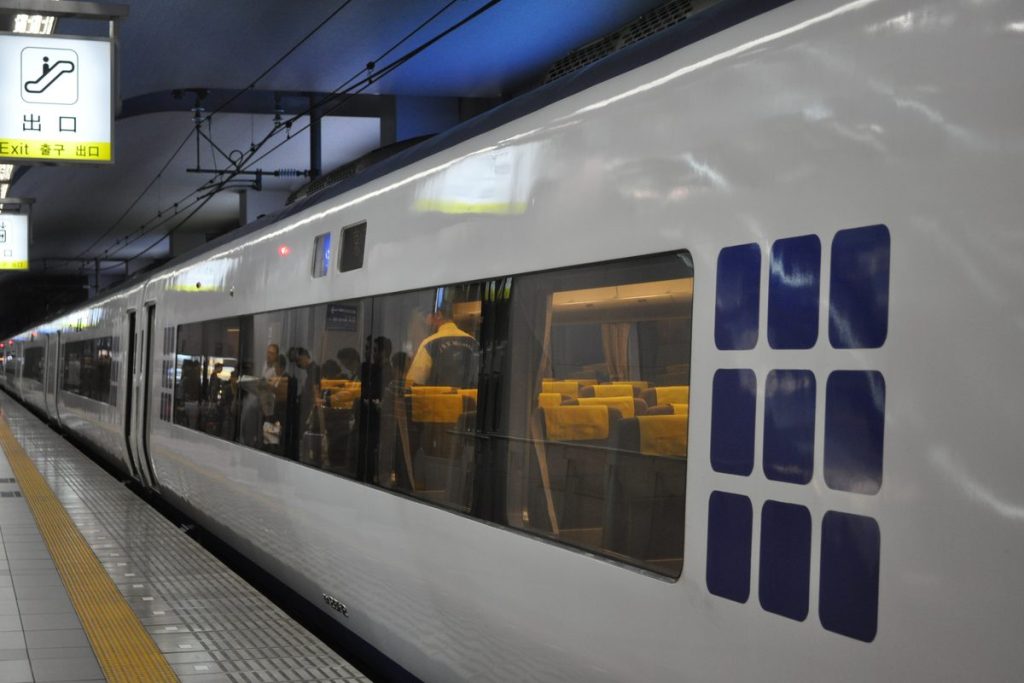
Haruka vs limousine bus at a glance
With the visitor ticket, the Haruka is ¥600 cheaper per adult, a little faster and unaffected by traffic; the bus runs later at night and drops you on the other side of Kyoto Station. So for a daytime landing the train is the default, and the bus is the specialist for late arrivals, heavy luggage and south-side hotels.
| Haruka (visitor one-way ticket) | Airport limousine bus (KATE) | |
|---|---|---|
| Adult / child fare | ¥2,200 / ¥1,100 (child 6–11) | ¥2,800 / ¥1,400 (elementary school pupils) |
| Who can use it | Foreign passport holders entering Japan as a Temporary Visitor | Anyone |
| Time to Kyoto | About 75–80 minutes on most trains | About 85–90 minutes from Terminal 1 (road traffic can add more) |
| How often | Roughly every 30 minutes in the daytime | Roughly every 20 minutes in the daytime |
| Last departure from KIX | Shortly after 22:00 (check the timetable) | 23:20 from Terminal 1, arriving Kyoto 00:45 |
| Arrives at | JR platforms inside Kyoto Station; the Kyoto ticket is also valid to participating JR stations in Kyoto city | Hachijo exit, the south side of Kyoto Station |
| Seat | One reserved seat included, or the non-reserved cars | Unreserved from the airport: first come, first served |
| Luggage | You carry it on and store it yourself | Up to 2 bags per person go in the trunk, with a claim tag |
For a family of two adults and two children aged 6 to 11, that is ¥6,600 on the Haruka against ¥8,400 on the bus. The gap is big enough that the bus only makes sense when it solves a real problem, such as the time you land or where you are staying.
Which one should you take?
Decide by three things, in this order: the time you clear customs, whether you qualify for the visitor ticket, and which side of Kyoto Station your hotel is on. Comfort and luggage come after that, because both options are direct and neither involves stairs-heavy transfers.
- Daytime landing, hotel near Kyoto Station’s north side, Kyoto Tower or the subway: Haruka. It is cheaper, slightly faster and arrives inside the JR station.
- Hotel elsewhere on the JR network in Kyoto city: Haruka. JR-West sells the Kyoto ticket as “Kyoto (within the city)”, valid to a list of participating JR stations, so check whether your nearest station is on it.
- Hotel near the Hachijo (south) exit: the bus drops you right there, which saves crossing a very large station with bags. On the train you would walk through to the Hachijo side yourself.
- Landing after about 21:00: look at both timetables before you leave the plane. The bus runs more than an hour later than the last Haruka.
- Two heavy suitcases each, or travelling with small children: the bus, if the timing works. Staff load the bags and you sit until Kyoto.
- Japanese citizen, or living in Japan on a residence status other than Temporary Visitor: you cannot use the ¥2,200 ticket. A regular Haruka ticket costs noticeably more, so the ¥2,800 bus becomes competitive.
How to get the ¥2,200 Haruka ticket (and the traps)
Buy it online, not at the station: JR-West’s machines and ticket offices in Japan do not sell the discounted ticket. This is the most common way first-timers end up paying full price, because the regular ticket machines at the airport will happily sell you a standard ticket instead (JR-West).
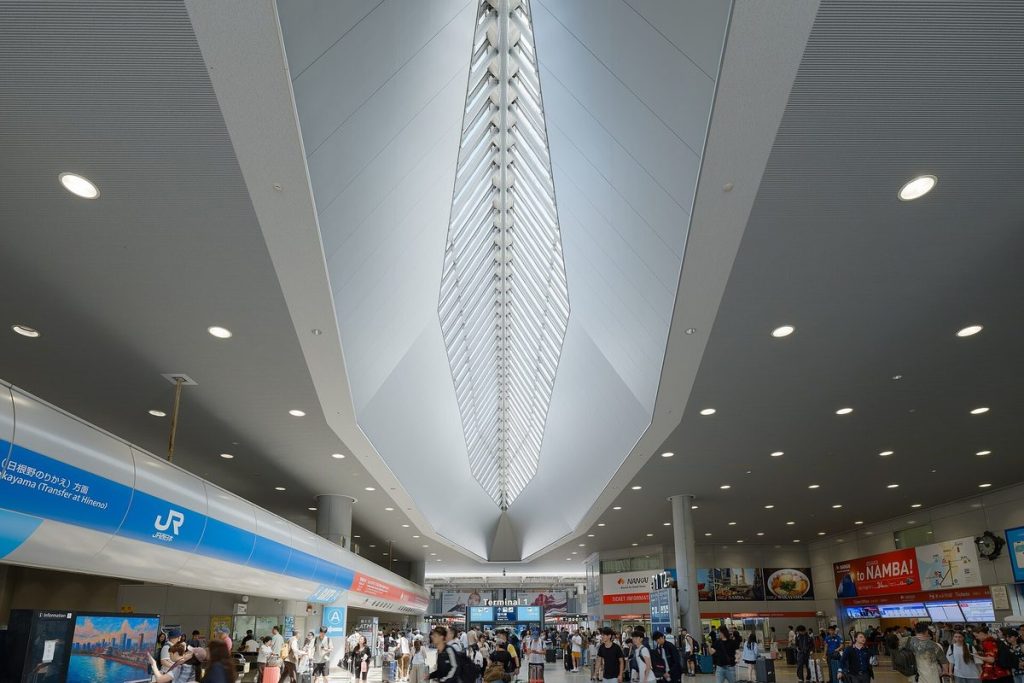
There are two versions, at the same price:
- JR-WEST ONLINE TRAIN RESERVATION: book from one month before travel and pay by credit card (virtual and numberless cards are not accepted). After landing, collect the ticket at a ticket machine with your reservation number, the 4-digit code you set, the card you paid with and your passport. Machines need a passport with an IC chip; without one, go to the ticket office, which is open 5:30 to 23:00 at Kansai-airport Station (JR-West, JR-West airport guide).
- WEST QR ticket: sold only by overseas travel agencies’ websites, not by JR-West itself. You register it on the WEST QR site, press “Use ticket” on the day (from 4:00 Japan time) and scan the QR code at the gate, with no paper ticket to collect. JR-West’s Japanese page says it can be bought up to the day of travel (WEST QR Haruka, JR-West, Japanese).
The rules that catch people out:
- Your phone must be online. WEST QR codes are shown live on the website; JR-West says screenshots and printed codes are not accepted. If you have no working phone in Japan, a companion on the same trip can register your ticket on their account (JR-West). Sort your data before you fly: see our Japan eSIM guide.
- Reserved seats are limited. The WEST QR ticket can only book the dedicated WEST QR seats, from 30 days before departure. If those are full, you ride in the non-reserved cars, with no refund of the difference (JR-West).
- No stopovers. Leave the gates at an intermediate station and the rest of the ticket becomes invalid, so this is not a way to stop in Osaka on the way.
- Carry your passport. Staff can ask to see it; JR-West’s Japanese conditions mention the Temporary Visitor landing sticker as the proof of eligibility.
- One ticket per traveller aged 6 and over. Children aged 6 to 11 use a child ticket, and two children cannot share one adult ticket.
Already have a rail pass? The nationwide Japan Rail Pass covers JR limited express trains, so it covers the Haruka; see whether it pays off in our JR Pass guide. JR-West’s 5-day Kansai WIDE Area Pass (¥12,000) includes reserved Haruka seats, but only pays off with longer trips such as Okayama or Kinosaki. The Kansai Area Pass stopped selling on September 30, 2026, and the 3-day Kansai Mini Pass needs a separate limited express ticket for the Haruka, so for a simple airport run the ¥2,200 one-way ticket is the better buy.
Taking the limousine bus to Kyoto
Buy a ticket at the counter or machine outside arrivals, then queue at bus stop 8 (Terminal 1) or stop 2 (Terminal 2); seats from the airport are first come, first served. It is the low-effort option: one ticket, one queue, and your bags go underneath (Kansai Airport, KATE).
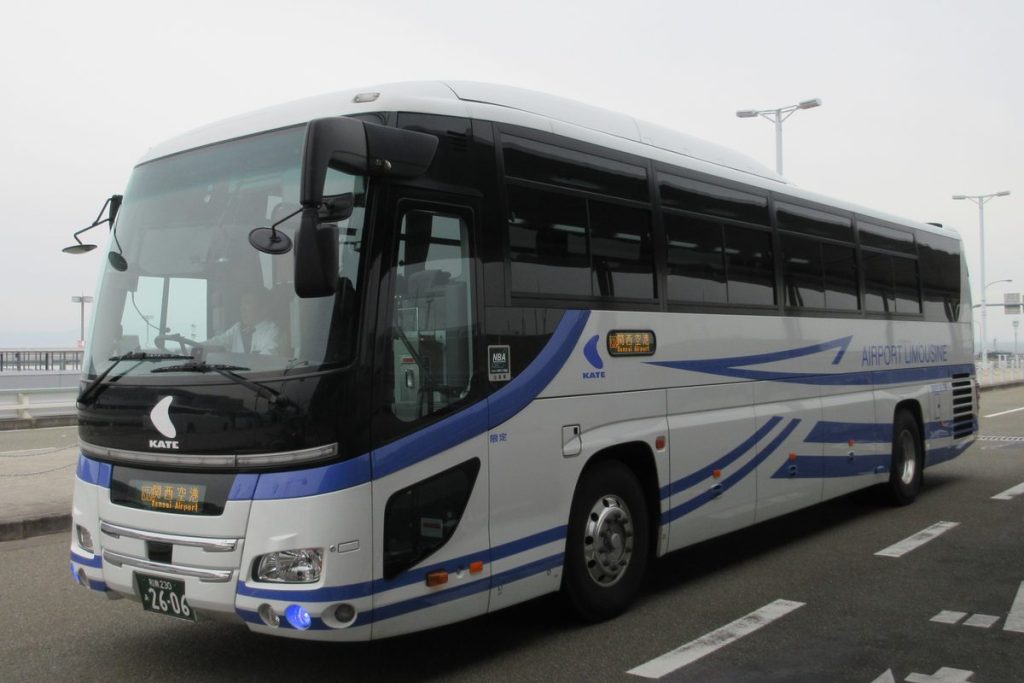
- Fare and payment: ¥2,800 for adults and ¥1,400 for children. Ticket counters and machines at both terminals take credit cards, and KATE lists the Kyoto line among the routes with contactless card payment (KATE timetable and fares, KATE).
- Luggage: up to 2 bags per person in the trunk, together no more than 30 kg and 0.25 m³. You get a claim tag and need it to collect your bags. Keep valuables, fragile items and power banks with you: KATE does not accept them in the trunk (KATE baggage rules).
- Time: KATE quotes about 1 hour 25 minutes to 1 hour 30 minutes between Kyoto Station Hachijo exit and Terminal 1, and warns that traffic can cause delays. In the daytime there is a bus about every 20 minutes (KATE).
- Round trip: a ¥5,100 round-trip ticket is valid for 14 days. That is ¥2,550 each way, still more than the Haruka visitor ticket, so it mainly suits travellers who cannot use the JR discount (KATE).
Landing late or at Terminal 2
If you expect to clear customs after about 21:45, plan on the bus: its last Terminal 1 departure is 23:20, more than an hour after the last Haruka toward Kyoto. On JR-West’s timetable the last Haruka leaves the airport shortly after 22:00 and reaches Kyoto around 23:30, and the gaps between evening trains get longer (Haruka timetable, KATE).
- Count your real exit time. Immigration, baggage claim and customs can easily take an hour on a busy evening, so compare the timetables with that time, not your landing time.
- Terminal 2 (mainly Peach flights): there is no train station at Terminal 2. A free shuttle bus runs to Terminal 1 and the station in about 7 to 9 minutes. The Kyoto bus, by contrast, picks up at Terminal 2 on many departures, about 13 minutes before it leaves Terminal 1 (Kansai Airport, KATE).
- Missed both? Ask at the airport information desk before deciding on a taxi. A night near the airport and the first train in the morning is often the calmer and cheaper option.
Arriving late often also means arriving hungry and short of cash. Our cash or card guide explains which ATMs work with foreign cards and how much yen to carry.
Where you arrive in Kyoto Station
The Haruka brings you into the JR station itself, while the bus stops outside the Hachijo exit on the south side. Kyoto Station is huge, so the right choice can save a long walk with luggage at the end of a long day.
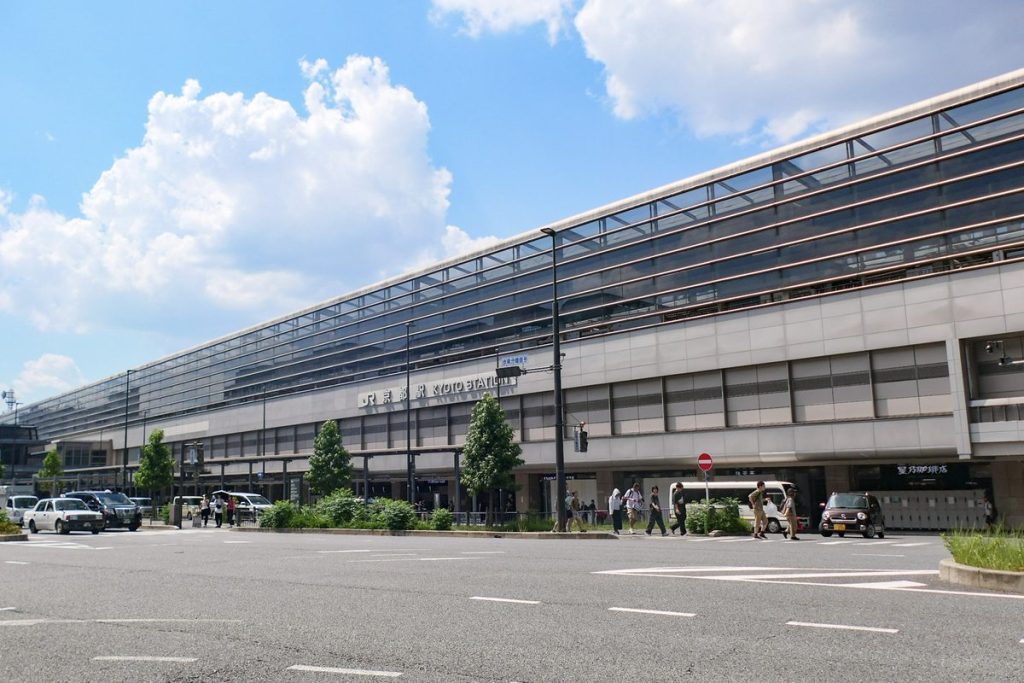
- North (Karasuma) side: Kyoto Tower, the main city bus terminal and the subway entrances. Most first-time visitors staying “near Kyoto Station” are on this side, which favours the train.
- South (Hachijo) side: the Shinkansen gates and a cluster of hotels along Hachijo Street. If your hotel is here, the bus drops you at the door.
- Heading further on: with the Haruka visitor ticket you can continue on JR to participating stations within Kyoto city without buying another ticket. For anywhere else, change to the subway, a city bus or a taxi. Load an ICOCA or other IC card first; our IC card guide explains your options.
Cheaper options and travellers who cannot use the visitor ticket
The cheapest rail route is the Kansai-Airport Rapid Service to Osaka, then a JR Kyoto Line train, for the basic fare only; it is slower and means changing trains with your luggage. It suits light packers on a tight budget, not a family arriving after a long-haul flight (JR-West airport guide).
If you would rather skip the trains with a family or a lot of luggage, a prebooked private transfer is the other route: private Kansai Airport transfer on Klook (partner link: we may earn a commission). Check the vehicle size, luggage allowance and whether your Kyoto hotel is inside the service area on the Klook page.
- ICOCA: you can buy an ICOCA card from the machines at Kansai-airport Station, but only with cash, and it pays the basic fare when you tap through the gates. For the Haruka you need a limited express ticket on top (JR-West).
- Regular Haruka ticket: anyone can buy one at the ticket machines (basic fare plus limited express ticket). Because it costs noticeably more than ¥2,200, compare it with the ¥2,800 bus if you do not qualify for the visitor ticket (JR-West).
Going back to the airport from Kyoto
On the way home the rules flip: the bus from Kyoto Station needs a reservation, while the Haruka visitor ticket works in this direction too. Book before your last day so the return journey is not the one thing left to chance (KATE, JR-West).
- Bus: KATE says reservations are required for buses to Kansai Airport. Bookings are handled by the Keihan Bus Reservation Center (075-682-4400, 9:00 to 18:00), with online booking for customers who do not yet have a ticket (KATE).
- Haruka: JR-West sells the ¥2,200 ticket from Kyoto to Kansai Airport as well. The first Haruka from Kyoto leaves before 6:00; check the timetable against your check-in time for an early flight.
Before you land: 5-minute checklist
Two decisions made at home save you a queue and a few thousand yen at the airport.
- Check your hotel’s side of Kyoto Station: north (Karasuma) favours the Haruka, south (Hachijo) favours the bus.
- Eligible for the visitor ticket? Book the ¥2,200 Haruka ticket online, or buy a WEST QR ticket and register it.
- Make sure your phone will have data on arrival if you use WEST QR. Screenshots are not accepted.
- Carry your passport with the Temporary Visitor sticker; you need it to collect or use the ticket.
- Landing late? Compare the last Haruka with the 23:20 bus from Terminal 1 using your realistic exit time.
- Flying Peach into Terminal 2? Allow for the shuttle bus to the station, or take the Kyoto bus from Terminal 2.
- Flying home by bus? Reserve the Kyoto to Kansai Airport bus in advance.
More first-day help: our arrival checklist, what to book before your trip and, if you are continuing by bullet train with big cases, the Shinkansen luggage rules.
Frequently asked questions
What is the best way from Kansai Airport to Kyoto?
For most first-time visitors, the JR Haruka limited express with JR-West’s visitor one-way ticket: ¥2,200 for an adult with a reserved seat and about 80 minutes to Kyoto Station without changing trains. The limousine bus (¥2,800, about 85–90 minutes) is better for late arrivals and hotels on the Hachijo side.
Can I buy the Haruka discount ticket at Kansai Airport?
Not at the station. JR-West does not sell it at ticket machines or ticket offices in Japan. Book it through JR-WEST ONLINE TRAIN RESERVATION and collect it at the station with your passport, or buy a WEST QR ticket from an overseas travel agency’s website.
How long does the Haruka take from Kansai Airport to Kyoto?
About 75 to 80 minutes on most trains, which run roughly every 30 minutes in the daytime. Early-morning trains with extra stops take longer, so check JR-West’s timetable for your arrival time.
What time is the last train or bus from Kansai Airport to Kyoto?
The last Haruka toward Kyoto leaves shortly after 22:00. The last limousine bus leaves Terminal 1 at 23:20 and reaches Kyoto Station at 00:45, according to KATE’s timetable checked on October 7, 2026.
Does the Japan Rail Pass cover the Haruka?
Yes. The Japan Rail Pass covers JR limited express trains, including the Haruka. The Kansai Area Pass, which also covered it, stopped selling on September 30, 2026.
How we checked: official sources
- JR-West: HARUKA One-way Ticket (eligibility, prices, purchase and pickup)
- JR-West: WEST QR HARUKA One-way Ticket and JR-West Odekake: WEST QR Haruka conditions (Japanese)
- JR-West: usage guide from Kansai International Airport (tickets, ICOCA, ticket office hours)
- JR-West: Haruka timetable (PDF)
- JR-West: rail pass list, Kansai Area Pass (sales ended), Kansai Mini Pass and Kansai WIDE Area Pass
- Japan Rail Pass: scope of validity
- KATE: Kyoto Station line timetable and fares and passenger instructions (tickets, reservations, baggage)
- Kansai International Airport: buses from the airport and inter-terminal shuttle
Last checked against these sources on October 7, 2026 (JST). Fares, timetables and ticket rules change; confirm on the operator’s page before you travel.
Editorial information
- Written by
- Mahalohana
- Published
- Updated
- Last verified
Sources
- HARUKA One-way Ticket — West Japan Railway Company
- WEST QR HARUKA One-way Ticket — West Japan Railway Company
- WEST QR Haruka one-way ticket conditions (Japanese) — JR-West Odekake Net
- JR-WEST usage guide from Kansai International Airport — West Japan Railway Company
- Kansai-Airport Ltd. Express HARUKA timetable (PDF) — West Japan Railway Company
- JR-WEST RAIL PASS list — West Japan Railway Company
- Kansai Area Pass (sales ended September 30, 2026) — West Japan Railway Company
- Kansai Mini Pass — West Japan Railway Company
- Kansai WIDE Area Pass — West Japan Railway Company
- Scope of validity — Japan Rail Pass (JR Group)
- Kyoto Station / Highway Kyotanabe: timetable and fares — Kansai Airport Transportation Enterprise
- Instructions (tickets, reservations, baggage) — Kansai Airport Transportation Enterprise
- Bus: from the airport to the destination — Kansai International Airport