
Photo: Mahalohana / Japan Trip Kit
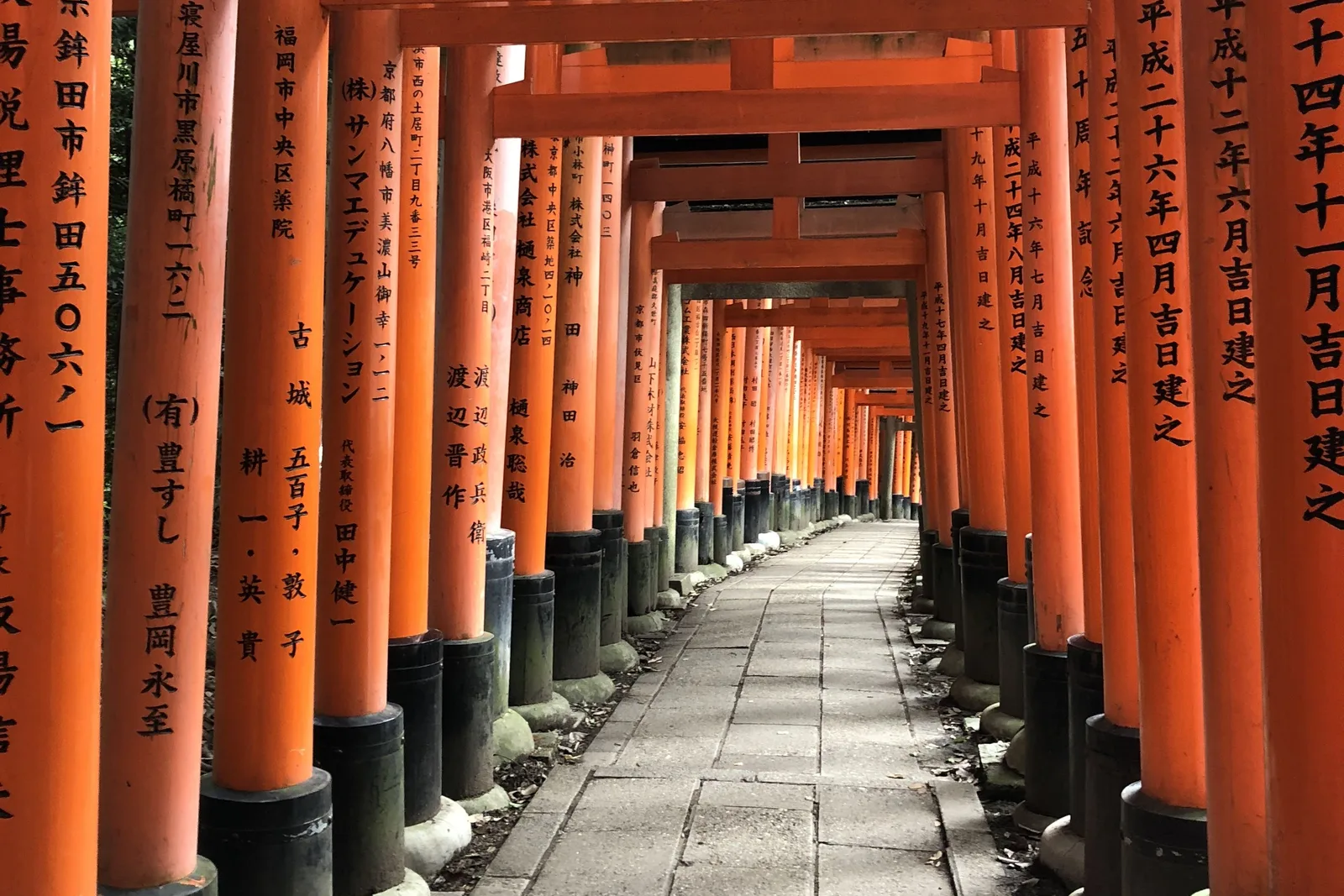
Fushimi Inari Taisha is the head shrine of Japan’s Inari shrines, and its torii paths climb Inariyama, a 233-meter mountain behind the main hall. The shrine counts around 10,000 torii along those paths. Getting there is easy, since two railways stop close by. The decisions that shape the visit are which line to take from where you sleep, what time to arrive, and where to turn back. Our Osaka, Kyoto and Kansai hub shows how this stop fits into the rest of a Kansai trip.
Which train gets you to Fushimi Inari from where you are staying?
Find your starting point in the left column; the middle column is the train to take. JR is cheapest from Kyoto Station, Keihan from Gion and from Osaka’s Keihan stations.
| Starting from | Take this | Fare and time |
|---|---|---|
| Kyoto Station | JR Nara Line to Inari (local and rapid trains both stop), which is right next to the shrine | ¥150 (child ¥70); 7 minutes on the 7:40 local on December 3, 2026 |
| Gion, Kawaramachi or Sanjo | Keihan Main Line from Gion-shijo or Sanjo to Fushimi-inari (not on a limited express, which does not stop there), then a 5-minute walk east | ¥240; about 22 minutes from Gion-shijo |
| Osaka Station or Umeda | JR Special Rapid to Kyoto, then the JR Nara Line to Inari | ¥840 (child ¥420); 48 minutes on the 6:33 departure on December 3, 2026, with a change at Kyoto |
| Yodoyabashi or Kyobashi in Osaka (Namba is a Midosuji Line ride from Yodoyabashi) | Keihan Main Line straight to Fushimi-inari, on a train that stops there | ¥480 from either station |
| Kyoto Station by city bus | Avoid: City Bus South 5 to Inari Taisha-mae, then a 7-minute walk | Kyoto City Tourism Association warns that the bus journey time can vary by more than 24 minutes |
Both stations take ICOCA and the other nationwide IC cards. JR-West lists coin lockers at Inari Station, so use this station if you arrive with bags on the way between Kyoto and Nara. The JR stop also suits a Nara day trip, because Inari is on the same line; our Kyoto to Nara guide covers that leg.
Is JR Inari or Keihan Fushimi-inari the better station?
JR Inari if you come from Kyoto Station or Osaka Station; Keihan Fushimi-inari if you come from Gion, Kawaramachi or Osaka’s Yodoyabashi side. The shrine’s access page puts Inari Station “right next to” the shrine, with Kyoto Station two stations and 5 minutes away.
Kyoto City Tourism Association gives about 9 minutes for the same trip, and JR-West’s route search showed 7 minutes for the local on our sample date; the figures differ by train and by source. The association adds that all rapid services, including the Miyakoji Rapid and the Regional Rapid, stop at Inari as well as the locals.
Keihan’s station is a 5-minute walk east, along a street of souvenir shops and restaurants, over the Inari Bridge and across the JR line to the main approach.
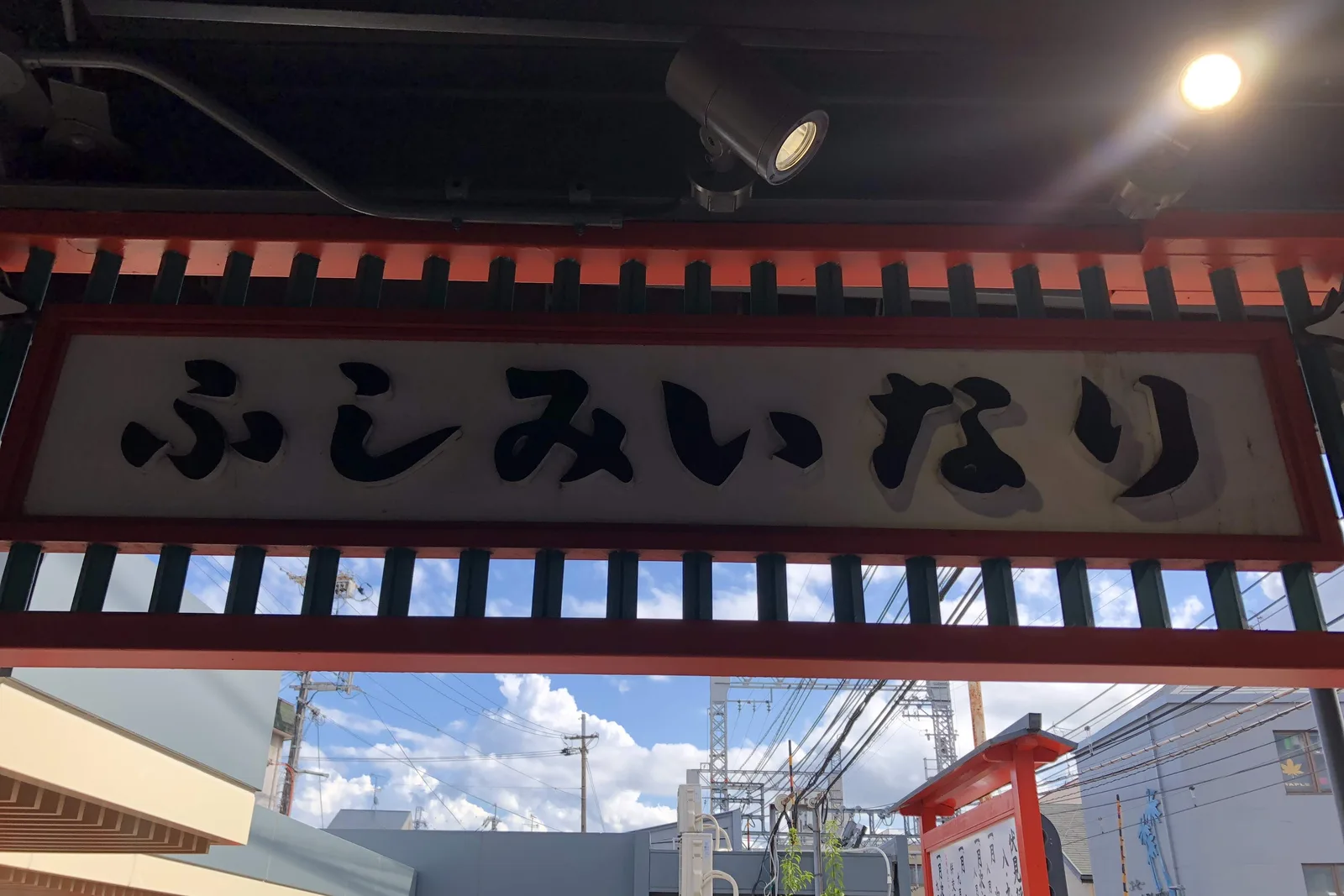
Photo: Mahalohana / Japan Trip Kit
The trap on Keihan is the train type. Kyoto City Tourism Association notes that limited expresses do not stop at Fushimi-inari, so from Gion-shijo or from Osaka, check that Fushimi-inari is among the train’s stops before you board. The two stations are close enough to mix: arrive by JR and leave from Keihan toward Gion, or the reverse.
How long does the Fushimi Inari hike take?
The full loop over the mountain is about 4 km and takes about two hours, according to Kyoto City Tourism Association, which also lists 120 minutes for a visit that includes the loop; JNTO allows two to three hours. You do not have to go to the top: turn around wherever your time runs out and come back down the way you went up.
| If you want | Turn back at | What you see |
|---|---|---|
| The famous tunnels only | Okusha Hohaisho, at the end of the Senbon Torii | The densest torii tunnels and the Omokaru stone lanterns; the shrine says Inariyama’s three peaks are visible behind the building |
| A view over the city | Kojingamine (Tanakasha Shinseki), partway up | The shrine describes a view over central Kyoto and the area to its north from this site |
| The whole mountain (about 2 hours) | Nowhere: continue over Ichinomine, the 233 m summit | The sites of former shrines (shinseki) and many otsuka worshipping stones engraved with deities’ names |
Wear shoes you could hike in. JNTO says a souvenir shop and tea stall sit about halfway up. The shrine allows eating and drinking only in marked rest areas, not while walking, so plan any snack for a rest stop.
What time should you go, and is Fushimi Inari open at night?
The grounds never close, so you can walk the torii at first light or after dark; the offices keep set hours. Kyoto City Tourism Association lists the shrine as open day and night every day, with prayers (kito) from 8:30 to 16:30 and the amulet counter from 8:00 to 18:00. Arrive after 18:00 and you can still walk the paths, but the amulet counter is shut. Kyoto City Tourism Association lists the shrine as free to enter.
For crowds, the most useful tool is Kyoto City Tourism Association’s comfort forecast for the Fushimi area. It rates expected crowding on a five-step scale for each time of day, taking weather into account, up to about two months ahead. Check it for your date: if the forecast shows a busy day, an early start pays off most. JNTO suggests a different plan for walkers who want the full loop: start late morning, have a light lunch on the hike, and finish mid-afternoon.
- Busy days by tradition: the first Day of the Horse in February, which, according to Kyoto City Tourism Association, has drawn crowds for centuries, and the Inari Festival, which runs from the Sunday nearest April 20 until May 3.
- New Year: the shrine closes its own parking from December 30 to January 6, and its access page refers drivers to Kyoto Prefectural Police for New Year traffic controls. Come by train.
Worked example: a dawn visit from Osaka on December 3, 2026
Picture a visitor staying near Osaka Station who wants the torii before the day’s crowds and then the rest of the morning in Gion. The trains below are the ones JR-West’s route search returns for that Thursday; the 9:30 finish is our estimate from Kyoto City Tourism Association’s two hours for the loop, not a timetable time, so photo stops or a slower pace push every later step back.
| Time | Step | Fare |
|---|---|---|
| 6:33 | JR Special Rapid from Osaka, arriving Kyoto 7:01 | ¥840 to Inari (one ticket, includes the next leg) |
| 7:15 | JR Nara Line local from Kyoto, arriving Inari 7:21 | Included |
| 7:25 to about 9:30 (estimate) | Main gate, Senbon Torii, then the full loop over Ichinomine and back down | Free |
| After 8:00 | The amulet counter is open on the way down | Optional |
| About 9:40 | Walk 5 minutes to Keihan Fushimi-inari; train to Gion-shijo, about 22 minutes | ¥240 |
The morning costs ¥1,080 in fares and puts the visitor in Gion before 10:30. The same ICOCA card works on both railways. A visitor based in Namba would instead take the Midosuji Line to Yodoyabashi, ride Keihan to Fushimi-inari for ¥480 (plus the subway fare), then continue to Gion-shijo for ¥240. Faster ways between Osaka and Kyoto for the rest of the trip are compared in our Osaka to Kyoto train guide.
Which shrine rules catch visitors out?
For a sightseeing visit, the rules that matter most cover eating on the move, photos on narrow paths and drones. The shrine’s list of prohibited acts, in force since January 1, 2022, includes:
- eating or drinking outside the marked free rest areas, including eating while walking or standing;
- stopping on narrow paths to photograph or film so that worshippers cannot pass;
- flying drones or other aircraft, smoking and fires;
- bringing pets for walks (guide dogs and other necessary animals excepted), and leaving strollers unattended outside the marked areas;
- walking the grounds in wedding dresses or costumes unsuited to worship, and commercial photography.
The shrine says anyone breaking these is asked to stop, and asked to leave if they do not. If you are planning the rest of the day in Kyoto, our guide to getting around Kyoto compares buses and the subway.
Quick questions about visiting Fushimi Inari
How do I get to Fushimi Inari from Kyoto Station?
Take the JR Nara Line two stops to Inari Station, which is next to the shrine. On December 3, 2026 the 7:40 local took 7 minutes for ¥150.
Is Fushimi Inari free?
Yes. Kyoto City Tourism Association tags the shrine as free; you pay only if you request prayers or buy amulets.
Can I visit Fushimi Inari at night?
Yes, the grounds are open day and night. The amulet counter closes at 18:00 and prayers end at 16:30.
Do I need to climb to the top?
No. You can turn back at Okusha Hohaisho at the end of the Senbon Torii; the full loop to the 233 m summit takes about two hours.
Can I get to Fushimi Inari directly from Osaka?
Yes, by Keihan from Yodoyabashi or Kyobashi to Fushimi-inari for ¥480, on a train that stops there. By JR, change at Kyoto to the Nara Line; the fare from Osaka to Inari is ¥840.
How we checked: official sources
- Fushimi Inari Taisha: Access (JR Inari, Keihan Fushimi-inari, City Bus South 5)
- Fushimi Inari Taisha: Access (Japanese; New Year parking closure December 30 to January 6)
- Fushimi Inari Taisha: Requests for all visitors (rules)
- Fushimi Inari Taisha: FAQ (about 10,000 torii)
- Fushimi Inari Taisha: Inariyama (233 m)
- Fushimi Inari Taisha: Okusha Hohaisho
- Fushimi Inari Taisha: Kojingamine (Tanakasha Shinseki), city view
- Fushimi Inari Taisha: Ichinomine (summit)
- Kyoto City Tourism Association (Kyoto Kanko Navi): Fushimi Inari Taisha (open day and night, about 4 km and about 2 hours, office hours; Japanese)
- Kyoto City Tourism Association: Comfortable access to Fushimi (JR about 9 minutes, Keihan about 22 minutes, bus caution)
- Kyoto City Tourism Association: Kyoto tourism comfort forecast, Fushimi (Japanese)
- JNTO: Fushimi Inari Taisha Shrine (two to three hours to tour the mountain)
- JR-West: My-Dia route search, Kyoto to Inari and Osaka to Inari, December 3, 2026 (Japanese)
- JR-West: Inari Station information (ICOCA gates, coin lockers; Japanese)
- Keihan: fare table from Fushimi-inari (PDF, Japanese)
All checked November 18, 2026. Fares, timetables and shrine rules can change; confirm on the official page before you go.
Editorial information
- Written by
- Mahalohana
- Published
- Last verified
Sources
- Fushimi Inari Taisha: Access (JR Inari, Keihan Fushimi-inari, City Bus South 5) — inari.jp
- Fushimi Inari Taisha: Access (Japanese; New Year parking closure December 30 to January 6) — inari.jp
- Fushimi Inari Taisha: Requests for all visitors (rules) — inari.jp
- Fushimi Inari Taisha: FAQ (about 10,000 torii) — inari.jp
- Fushimi Inari Taisha: Inariyama (233 m) — inari.jp
- Fushimi Inari Taisha: Okusha Hohaisho — inari.jp
- Fushimi Inari Taisha: Kojingamine (Tanakasha Shinseki), city view — inari.jp
- Fushimi Inari Taisha: Ichinomine (summit) — inari.jp
- Kyoto City Tourism Association (Kyoto Kanko Navi): Fushimi Inari Taisha (open day and night, about 4 km and about 2 hours, office hours; Japanese) — ja.kyoto.travel
- Kyoto City Tourism Association: Comfortable access to Fushimi (JR about 9 minutes, Keihan about 22 minutes, bus caution) — kyoto.travel
- Kyoto City Tourism Association: Kyoto tourism comfort forecast, Fushimi (Japanese) — ja.kyoto.travel
- JNTO: Fushimi Inari Taisha Shrine (two to three hours to tour the mountain) — www.japan.travel
- JR-West: My-Dia route search, Kyoto to Inari and Osaka to Inari, December 3, 2026 (Japanese) — www.jr-odekake.net
- JR-West: Inari Station information (ICOCA gates, coin lockers; Japanese) — eki.jr-odekake.net
- Keihan: fare table from Fushimi-inari (PDF, Japanese) — www.keihan.co.jp