
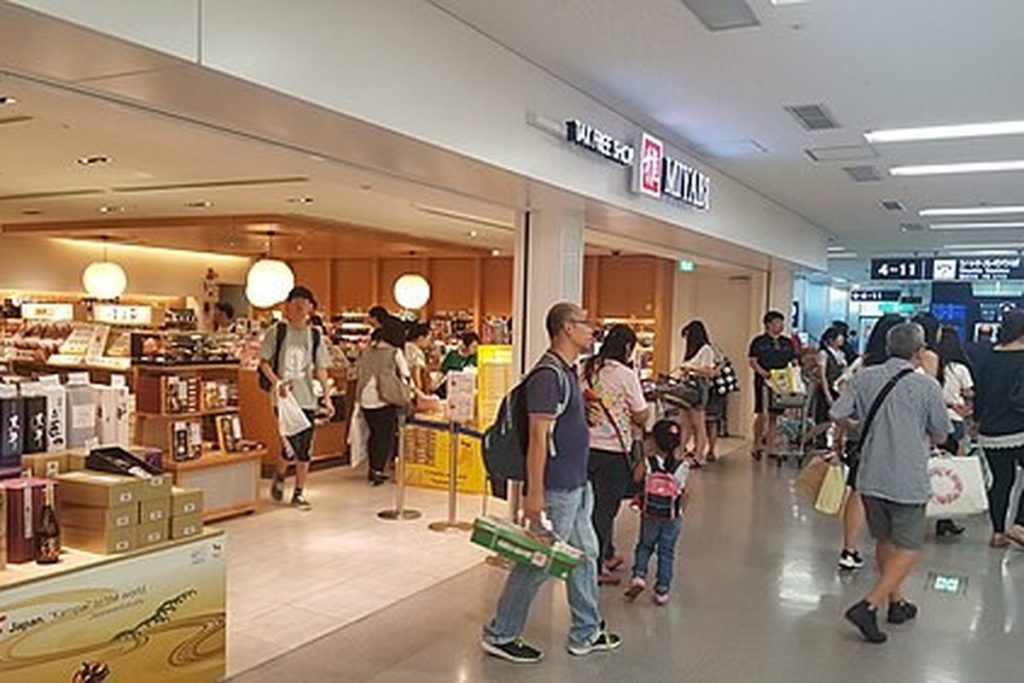
Japan is replacing its tax-free shopping system with a refund method. Until now, eligible visitors paid the price without consumption tax at the till (or got the tax back at a tax-free counter in the store). Under the new rules you pay tax first and claim it back on the way out. That puts a new step at the start of your departure day, and one missed detail (a suitcase already checked in, one snack eaten from a receipt) can cost you the refund.
This guide covers only what the National Tax Agency (NTA), the Japan Tourism Agency (JTA), Japan Customs and the Ministry of Finance have published. Where the official rules leave a detail to each shop, such as how and when the money is paid, we say so instead of guessing.
What changes on November 1, 2026
The refund method applies by purchase date, not by the day you fly home. The NTA says it applies to sales made at tax-free shops on or after November 1, 2026, and that there is no transition period in which shops can run both systems (NTA Q&A, Q8).
For you, the change means paying the full price in the shop and getting the tax back only after Customs has seen the goods at the airport.
- At the shop: you pay the tax-inclusive price. The shop explains how the refund will be paid and asks you to set it up, for example registering a card (JTA/NTA/Customs leaflet).
- At departure: Customs confirms your purchases before bag check-in and security, in the public part of the departure lobby. Under the old system the check happened after security.
- The goods: the split between general goods and consumables ends. So do the ¥500,000 daily cap on consumables and the sealed-bag rule (NTA English overview).
- The money: the shop pays back the amount equivalent to consumption tax after Customs has confirmed export.
The Ministry of Finance gives the reason as fraud. Tax-free goods were being resold inside Japan, so the sale now becomes tax-free only once Customs confirms the goods are leaving (MOF, FY2025 tax reform brochure).
Who can claim the refund
The eligible groups barely change. Per the JTA list of eligible purchasers (JTA, eligible purchasers):
If you are a short-stay visitor on a normal tourist entry, you are eligible; the fine print mainly matters for residents, long stays and Japanese nationals living abroad.
- Foreign visitors who are not residents of Japan and have been in Japan for less than six months since entry, such as Temporary Visitors. Show your passport at the shop.
- Transit, port-of-call and cruise visitors. Cruise passengers on a cruise-ship landing permit now need their passport (a copy is accepted) as well as the permit.
- Japanese nationals living abroad for two years or more, within six months of a temporary return. Bring your passport plus a supporting document. The My Number Card is now accepted, provided it shows that you moved abroad.
Residents of Japan cannot buy tax-free, and that includes anyone who has been in Japan for six months or more since entry. The refund method does not change this.
What qualifies: the ¥5,000 rule and what’s excluded
Plan purchases per shop and per day: two ¥3,000 purchases in different shops do not add up to one qualifying sale.
- Minimum spend: ¥5,000 or more before tax, per shop, per day. General goods and consumables now count together toward the ¥5,000 (JTA traveler page).
- No upper limit on consumables any more. But you may only buy what you can personally carry out of Japan when you leave, because Customs may ask to see it.
- Excluded: gold and platinum bullion, gold and platinum coins, and items that are exempt from consumption tax anyway.
- Expensive items: for anything priced at ¥1 million or more before tax, Customs may ask to see the certificate of authenticity or warranty along with the item (JTA traveler FAQ).
- Shipping: you can no longer post tax-free goods home yourself. That option ended on March 31, 2025. Some shops can still ship directly overseas at the time of purchase, so ask the shop.
How much do you get back? The refund is the amount equivalent to consumption tax. Japan’s standard rate is 10%, and the reduced rate is 8% for food and non-alcoholic drinks (not restaurant meals) (NTA Tax Answer No.6303). The NTA also notes a two-year cut to the food rate scheduled from April 1, 2027. Inside a tax-inclusive price, the tax is 10/110 at 10% (about 9.1% of what you paid) or 8/108 at 8% (about 7.4%). For example, an ¥11,000 item at 10% includes ¥1,000 of tax. The law does not set how refunds are paid, so ask the shop how much will reach you, by which method, and when.
How the new tax-free refund works, step by step
The habit that makes the refund work is simple: keep each receipt with its goods, unused, until Customs has checked them.
- Buy. Show your passport at a tax-free shop and pay the full price. Ask how the refund will be paid, set that up, and keep the receipt with the goods.
- Keep everything intact. Do not eat, drink or use consumables you bought tax-free. If you do, that purchase loses the refund (see the one-receipt rule below).
- Leave within 90 days. The 90 days run from the day after the purchase date to the 90th day. The NTA example: goods bought on November 1 must be confirmed by Customs by January 30 of the following year.
- Confirm at departure. Use the tax-free kiosk before baggage check-in (details in the next section).
- Get paid. The shop or its refund provider pays you once Customs’ confirmation reaches it. Possible methods include bank transfer, credit card, app transfer or cash at the departure port after the customs check. Methods vary by shop (JTA traveler FAQ).
At the airport: tax-free kiosk, green and red
This is the part most likely to go wrong, because it comes before the airline counter (JTA traveler page):
Allow extra time at departure, because this step comes before the airline counter and a queue here can eat into your check-in window.
- Where: tax-free procedure terminals (kiosks or electronic terminals) and customs inspection areas are in the international departure lobby, before baggage check-in.
- How: scan your passport. The screen shows green (no inspection, you are done) or red (take your tax-free goods to the customs inspection area).
- Visit Japan Web option: at Narita, Haneda, Kansai, Chubu, New Chitose, Fukuoka and Naha you can do this step online in Visit Japan Web instead of using a kiosk. It works only inside the area covered by the dedicated Wi-Fi in the international departure lobby, up to the security checkpoint.
- Timing: the kiosk takes a few seconds, but an inspection takes longer. Finish everything, including any inspection, before you complete boarding procedures. If you give up because time runs out, the confirmation counts as not done, and neither the airline nor Customs pays compensation for a missed flight.
- Checked bags cannot be retrieved to finish the tax-free step. Pack tax-free goods so you can show them before bag drop.
- Connecting from a domestic flight? Do it at the airport where you actually leave Japan. “Fly and cruise” travelers do it at the airport they finally fly out from.
The one-receipt rule (and consumables)
Customs confirms each purchase record, which in practice means each receipt. If even one item from a receipt is not with you, none of the items on that receipt can be confirmed, so none of them are refunded (NTA Q&A, Q20).
Pack all the items from one receipt together in your carry-on, so you can show them in one go.
- Buy anything you plan to use in Japan (snacks for the train, sunscreen) as a normal, non-tax-free purchase.
- If you have used up any tax-free items anyway, do not use the kiosk. Tell a customs officer at the counter instead, as the JTA instructs.
- Once Customs has confirmed your goods, take them out of Japan without delay. If you don’t, the tax is collected and penalties can apply.
If your trip spans October 31 and November 1
Because the rules follow the purchase date (NTA Q&A, Q8), one trip can include both kinds of purchase:
Keep pre-November receipts in a separate envelope; those purchases follow the old rules and were already tax-free at the till.
- Bought by October 31, 2026: the current system applies. You paid no tax at the till, and the existing rules still apply to those goods. Keep sealed consumable packaging unopened and carry everything out with you.
- Bought from November 1, 2026: you paid tax and need the kiosk step before bag drop to get it back.
- If you have both, keep the two sets of receipts apart and follow the airport staff’s or Customs’ instructions on the day. For questions about departure procedures, Japan Customs runs a Customs Counselor service.
Tax-free refund checklist
Screenshot this list or save it offline; you will want it at the shop till and again at the airport kiosk.
Before you buy
- ☐ Passport with you (cruise passengers: passport or a copy, plus the landing permit)
- ☐ Spend is ¥5,000 or more before tax at this shop today
- ☐ Asked the shop how the refund is paid, and set it up (card, app, account or cash at the port)
- ☐ Nothing on this receipt will be used in Japan
Before you fly
- ☐ Departure is within 90 days of each purchase (counting from the next day)
- ☐ Every item from every tax-free receipt is packed where you can show it
- ☐ Certificates or warranties ready for items of ¥1 million or more
- ☐ Extra time planned for the kiosk and a possible inspection
At the airport
- ☐ Kiosk or Visit Japan Web before bag drop, at your final departure airport
- ☐ Red result: goods shown at the customs inspection area
- ☐ Used something? Told a customs officer instead of using the kiosk
- ☐ Bags checked in only after the tax-free step
Frequently asked questions
When does Japan’s new tax-free system start?
It applies to purchases made at tax-free shops from November 1, 2026. What matters is the purchase date, not the day you leave Japan, and there is no period in which both systems run.
Do I still pay less at the till?
No. From November 1, 2026 you pay the full tax-inclusive price, and the consumption tax is refunded after Customs confirms at departure that you are taking the goods out of Japan.
Where do I do the customs check at the airport?
In the international departure lobby, before baggage check-in. Scan your passport at a tax-free kiosk. At Narita, Haneda, Kansai, Chubu, New Chitose, Fukuoka and Naha you can also use Visit Japan Web inside the dedicated Wi-Fi area before the security checkpoint.
What happens if the kiosk shows red?
Take your tax-free goods to the designated customs inspection area for verification. Allow time for this before you complete boarding procedures.
How long do I have to leave Japan?
Customs must confirm the goods within 90 days of purchase, counted from the day after the purchase date. The National Tax Agency’s example is goods bought on November 1 and confirmed by January 30 of the following year.
How much is the refund?
The amount equivalent to consumption tax: 10% standard or 8% reduced (food and non-alcoholic drinks), which is about 9.1% or 7.4% of a tax-inclusive price. How the money is paid is set by each shop or its refund provider, so ask when you buy.
Can I eat the snacks I bought tax-free?
Not if you want the refund. Used or eaten consumables cannot be confirmed by Customs. If one item on a receipt is missing, no item on that receipt is refunded. Tell a customs officer instead of using the kiosk.
Is there a maximum amount I can buy tax-free?
The ¥500,000 daily cap on consumables is abolished. You may only buy what you can personally carry out of Japan, and items of ¥1 million or more may need a certificate or warranty at Customs.
Official sources
- National Tax Agency: Tax-Free Shopping System will be shifted to the Refund Method (English overview, April 2025)
- National Tax Agency: Q&A on the refund method, overview (Japanese) and the NTA refund-method page
- Japan Tourism Agency: Special page for travelers (English) and FAQ for travelers (refund method)
- NTA, Japan Customs and JTA: “From November 2026” traveler leaflet (PDF) and list of eligible purchasers (PDF)
- Ministry of Finance: FY2025 tax reform brochure (Japanese, PDF)
- National Tax Agency: Tax Answer No.6303, consumption tax rates (Japanese)
- Japan Customs: Customs Counselor (questions about departure procedures)
Last checked against these sources on October 1, 2026 (JST). Shops, refund providers and airports may publish more operational detail as November 1 approaches. We will update this guide when they do.
Editorial information
- Written by
- Japan Trip Kit Editorial Team
- Published
- Updated
- Last verified
Sources
- Tax-Free Shopping System will be shifted to the Refund Method (English overview) — National Tax Agency
- Q&A on the refund method: overview (Japanese) — National Tax Agency
- Special page for travelers: Refund Method — Japan Tourism Agency
- Frequently Asked Questions for Travelers (Refund Method) — Japan Tourism Agency
- From November 2026 traveler leaflet — National Tax Agency, Japan Customs, Japan Tourism Agency
- FY2025 tax reform brochure — Ministry of Finance
- Tax Answer No.6303: consumption tax rates — National Tax Agency