
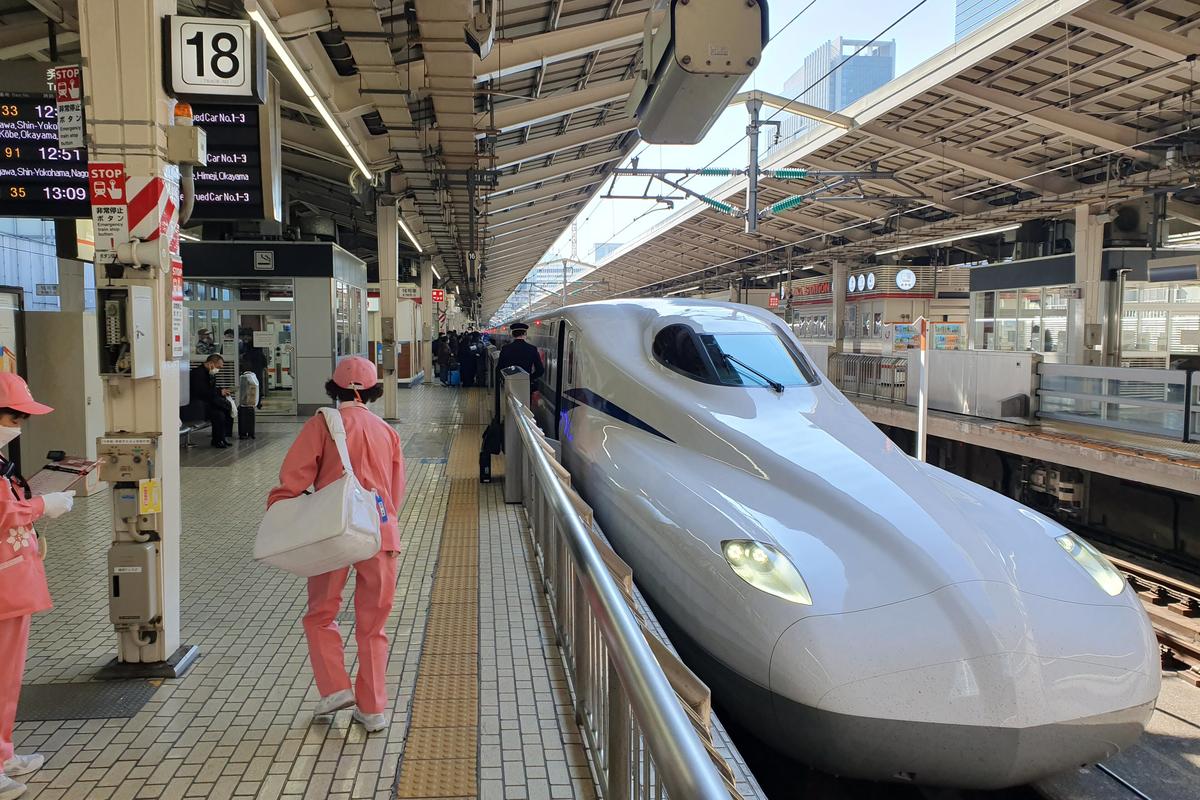
Photo: Syced / Wikimedia Commons, CC0
Tokyo to Kyoto is the trip most first-time visitors make on the Shinkansen, and buying the ticket is where people get stuck. You have to choose a train type, decide whether to reserve, and pick between an app and a station machine. This guide gives you the yen difference between each option, the booking rules that matter, and a step-by-step for the day you travel.
Nozomi, Hikari or Kodama: which train should you take?
Take the Nozomi unless you hold a Japan Rail Pass. It is the fastest train on the line, at just over two hours to Kyoto, and its reserved seat costs only ¥320 more than a Hikari seat. The Hikari stops more often and the Kodama stops at every station. Unless your pass forces it, saving ¥320 rarely makes up for the extra time.
| Tokyo → Kyoto, adult, one way | smartEX (online) | Who it suits |
|---|---|---|
| Nozomi, reserved seat | ¥13,970 | Almost everyone without a JR Pass |
| Hikari or Kodama, reserved seat | ¥13,650 | JR Pass holders (no extra charge with the pass) |
| Nozomi, child (6–11), reserved seat | ¥6,980 | Families: under-6s ride free if they sit on your lap |
The season surcharge is set by JR Central’s calendar and applies to reserved seats only. For a couple, the gap between the off-peak and top seasons is ¥1,200 for the round trip. That rarely justifies moving a trip, but it explains why the price you see can differ from the one a friend paid.
If you already have a Japan Rail Pass, JR Central notes that the Nozomi is not covered unless you buy a separate “NOZOMI MIZUHO Ticket”. Most pass holders take the Hikari and reserve a seat with the pass for free. Whether the pass is worth buying for this route is a separate question, covered with the break-even math in our JR Pass guide.
Book online with smartEX or buy at the station?
Book on smartEX if you know your travel date; buy at the station if you don’t. Both sell the same trains and seats. smartEX is a little cheaper for reserved seats and lets you change the train as often as you like. The station is simpler if you have no credit card handy or would rather book on the day.
| smartEX (official app/website) | Station ticket office or machine | |
|---|---|---|
| Booking opens | 5:30 a.m. one year before for some seats; the rest at 10:00 one month before | 10:00 a.m. one month before |
| Membership | Free, no annual fee; credit card needed to register | None |
| Changing your train | Free and unlimited until departure (within 3 months of purchase) | At the counter or a machine |
| Cancelling | ¥320 fee before departure | At the counter |
| Boarding | QR code on your phone, a registered IC card such as Suica, or a ticket printed at the station | Paper ticket through the gate |
| Group size | Up to 6 people per booking | Any |
Two details trip people up on smartEX. First, the fare is charged in yen to your card, and smartEX warns that every change creates a new charge before the old one is refunded. If your card adds foreign transaction fees, three changes can mean three sets of fees. Second, the fare covers the Shinkansen only. The local train or subway to Tokyo Station, and the bus or subway from Kyoto Station to your hotel, are paid separately (a Suica card is easiest).
Booking a year ahead sounds tempting but is rarely necessary outside holidays. For most trips, booking a few days ahead or on the morning of travel is enough. The exception is the peak periods below.
Do you need a reserved seat?
On ordinary days a non-reserved seat works, but a reserved seat costs under ¥1,000 extra and removes the risk of standing. During holiday peaks, the Nozomi has no non-reserved seats at all. For a first trip with luggage, reserve.
JR Central runs every Nozomi as all-reserved during its listed peak periods. For fiscal 2026 these are Golden Week, Obon, the September holidays, the long weekends around Sports Day (October) and Labor Thanksgiving Day (November), the New Year period, Coming-of-Age Day and the Vernal Equinox weekend. Check the exact dates on JR Central’s page before you travel. On those days, a non-reserved ticket only lets you stand on the Nozomi’s deck between cars, or look for a free seat on a Hikari or Kodama.
If you miss your reserved train, the ticket is not lost. On the same day you can take a later train in a non-reserved seat. With smartEX it is better to change the booking yourself before departure, which is free.
Which seat? Mount Fuji, luggage and the two-seat side
Heading from Tokyo to Kyoto, pick seat E: it is the window on the two-seat side, and it faces Mount Fuji. If you have a suitcase over 160 cm in total (length + width + height), you must book a seat with an oversized baggage area. Both choices are made when you book, so decide before you pay.
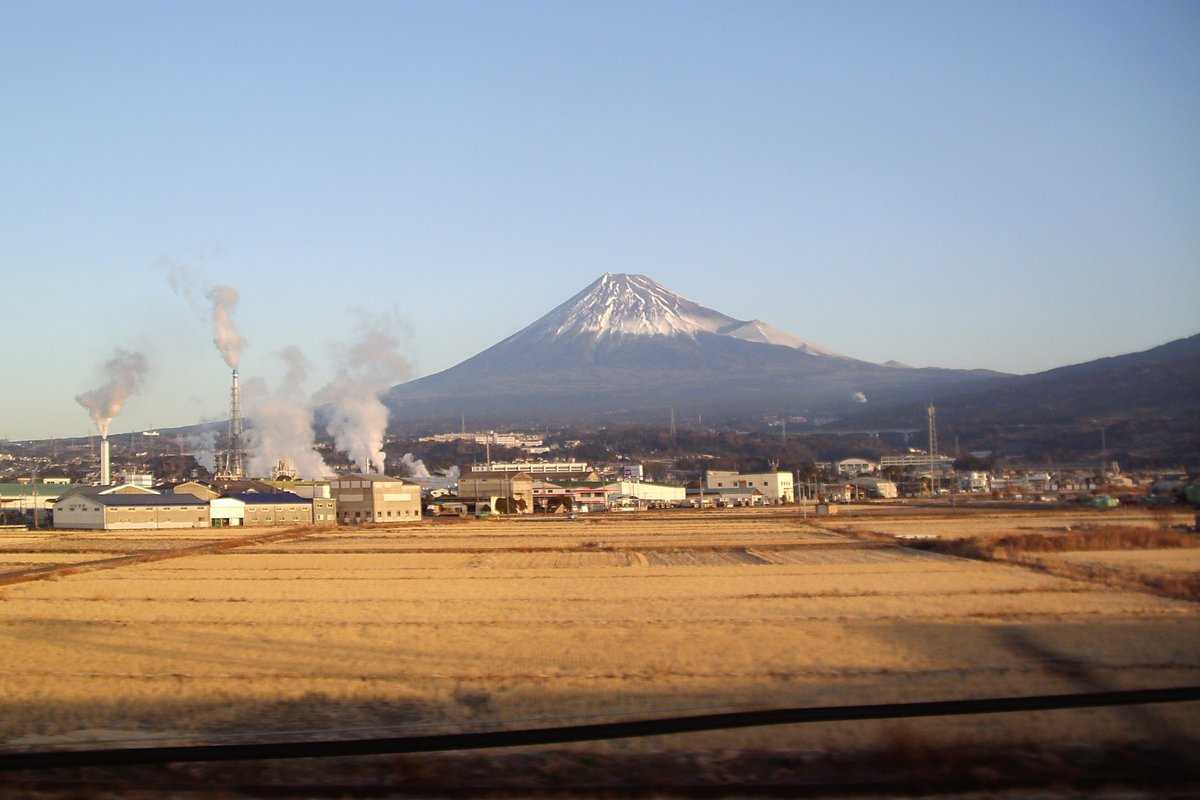
Photo: Indiana jo / Wikimedia Commons, CC BY-SA 4.0
The view lasts only a few minutes, around Shin-Fuji Station, and clear days are more common in the cooler months than in summer. Treat it as a bonus rather than a reason to rebook. The seat map in smartEX shows letters A to E, so you can pick E directly.
Bags up to 160 cm travel free on the overhead rack or at your feet. For 161 to 250 cm, the rule on the Tokaido Shinkansen is that you reserve a seat with an oversized baggage area, at no extra cost. Without that booking, a ¥1,000 fee applies on board. Our guide to Shinkansen oversized baggage seats covers the measuring and booking. If you would rather travel light, compare the cost of forwarding your suitcase to Kyoto.
On the day: step by step from Tokyo Station to Kyoto
Allow 20–30 minutes at Tokyo Station: find the JR Central Shinkansen gates, go through with your QR code, IC card or ticket, and board from the car number printed on your booking. Shinagawa is just as good a boarding point if your hotel is nearer, and every Nozomi to Kyoto stops there.
- Get to the right gates. At Tokyo Station, follow the blue signs for the “Tokaido Shinkansen” and not the green JR East Shinkansen (Tohoku, Hokuriku). If you arrive by JR local train, use a Shinkansen transfer gate inside the station.
- Pass the gate. smartEX: hold up the QR code or touch the IC card you registered. Paper tickets: insert all of them together and take them back, because you need them on board and to exit in Kyoto.
- Check the departure board for your train name (for example “Nozomi 225”), departure time and platform.
- Stand at your car number. Car numbers are marked on the platform floor and on hanging signs. Trains stop at Tokyo for only a few minutes before they depart, so board promptly.
- Arrive at Kyoto. Get your bags ready when the Kyoto announcement starts, because the stop is short. Exit through the Shinkansen gates; the Central and Hachijo exits are the main ones.
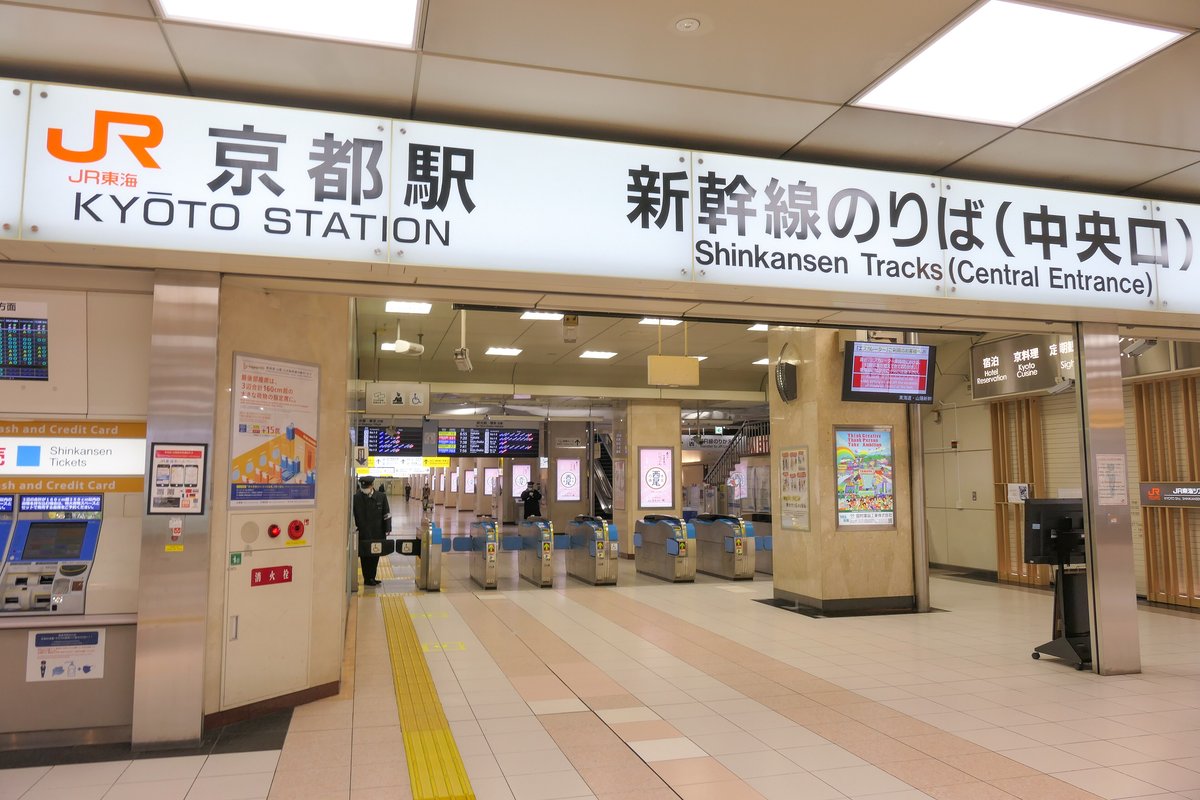
Photo: MaedaAkihiko / Wikimedia Commons, CC BY-SA 4.0
Every ticket machine at JR Central stations has an English menu, so buying on the day is straightforward. Choose the destination, train, number of people and seat, then pay by cash or card. Ticket offices get long queues on weekend mornings, which is another reason to book ahead online.
When the cheapest-looking option isn’t worth it
For a first visit, the extra ¥320 for the Nozomi and the few hundred yen for a reserved seat are the best money you will spend on this trip. The savings from slower trains or non-reserved seats are real, but they cost you time and certainty on a day when you are carrying luggage through two of Japan’s busiest stations.
- Kodama to save money: it is the same price as the Hikari on smartEX and much slower. Only worth it with a discounted early-booking product or if you want to stop on the way.
- Non-reserved to save ¥650–¥850: fine for a solo traveller with a backpack on a weekday, risky with suitcases or on a Friday evening.
- A JR Pass just for Tokyo–Kyoto return: usually not worth it on its own. Run the numbers in our JR Pass guide first.
Frequently asked questions
How much is the Shinkansen from Tokyo to Kyoto?
On smartEX, a Nozomi reserved seat is ¥13,970 one way for an adult in the regular season, and a Hikari or Kodama reserved seat is ¥13,650. Reserved seats are ¥200 cheaper in the off-peak season and up to ¥400 more in the top season.
Can I buy a Shinkansen ticket from outside Japan?
Yes. smartEX is built for that: you register with a credit card, book from your own country and board in Japan with a QR code or a registered IC card. Some products go on sale a year ahead; most seats open one month before.
Can I use Suica to ride the Shinkansen?
Only as a boarding key for a smartEX booking. You register the card in smartEX and touch it at the gate, but the fare is charged to your credit card, not deducted from the Suica balance.
Is it cheaper to buy the ticket at the station?
No. For reserved seats, smartEX is slightly cheaper than the regular ticket sold at the station. Non-reserved seats cost the same either way.
What if I miss my train?
You can still travel the same day in a non-reserved seat on a later train. With smartEX it is better to change the booking before departure, which costs nothing.
How we checked: official sources
- smartEX: fare sheet, Ordinary Car reserved seat (as of April 1, 2025)
- smartEX Service: booking window, changes, refunds, seasons
- smartEX: registration, QR tickets and IC cards
- JR Central: seasonal reserved-seat surcharges, April 2026 – March 2027 (Japanese)
- JR Central: all-reserved Nozomi peak periods, JR Pass rules
- JR Central: how to buy tickets at stations
All checked October 12, 2026. Fares can change, so confirm the final price on the booking screen before you pay.
Editorial information
- Written by
- Mahalohana
- Published
- Updated
- Last verified