
Japan’s trains are fast and punctual, but they were not designed around big suitcases. Stations have long transfers, stairs and rush-hour crowds, and Shinkansen luggage space is limited. Many visitors deal with this by not carrying their bags at all: they hand them to a hotel front desk or a counter, and the bags travel separately by truck or, on one new service, by Shinkansen. Yamato Transport’s version is called TA-Q-BIN (takkyubin); travel guides usually call it luggage forwarding.
This guide covers what forwarding costs, how the timing works, when same-day delivery is worth four times the price, and when taking your bag on the train is the better choice. Prices and rules come from Yamato Transport, JTB’s LUGGAGE EXPRESS, JR Central and Narita Airport, checked on October 8, 2026.
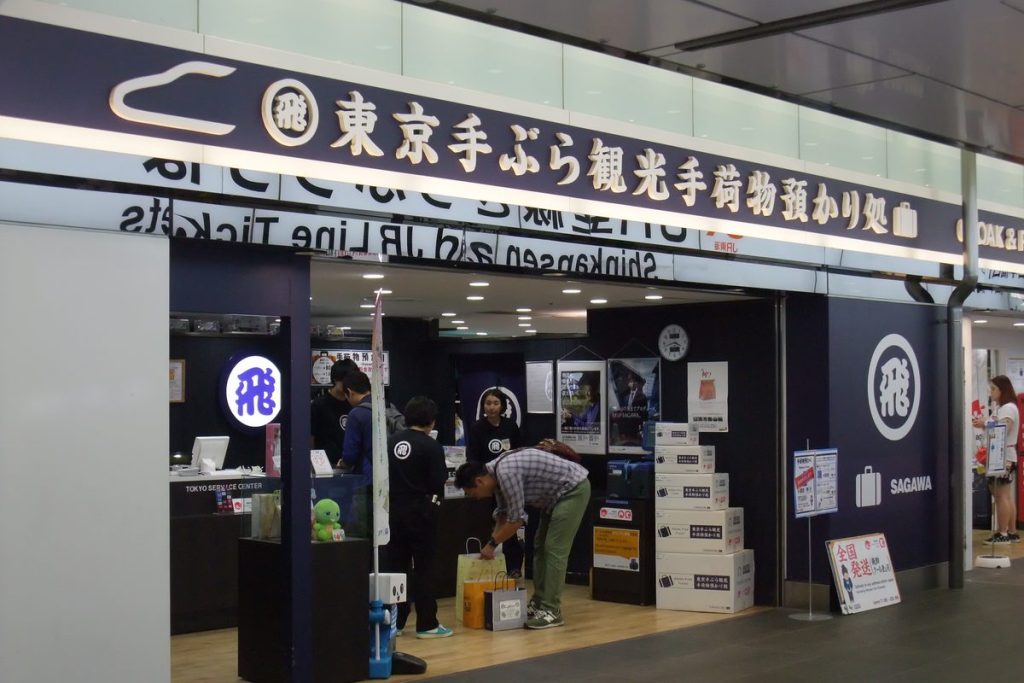
Your three options at a glance
Next-day forwarding is the cheap, flexible default; same-day delivery buys convenience at a premium; and carrying the bag yourself is free but only comfortable with one manageable case each. Most decisions come down to one question: can you spend a night apart from your big suitcase?
| Carry it on the Shinkansen | Next-day forwarding (Yamato TA-Q-BIN) | Same-day forwarding (LUGGAGE EXPRESS) | |
|---|---|---|---|
| Tokyo → Kyoto/Osaka, one large bag | Free (included in your ticket) | ¥3,160 for size 160 (cash fare; ¥100 off if you drop it at a counter) | ¥13,200 Regular, ¥16,500 Express |
| When the bag arrives | With you | The next day for most of Japan | Same evening: by 20:00 (Regular) or 18:00 (Express) if dropped by 10:00 |
| Where you can hand it over | – | Hotel front desks that handle TA-Q-BIN, Yamato offices, convenience stores such as 7-Eleven and FamilyMart | Eligible hotels (guests only), counters at Tokyo, Kyoto and Shin-Osaka stations, Haneda and Narita |
| Size limit | 161–250 cm needs a free reserved seat with an oversized baggage area; over 250 cm not allowed | Up to 200 cm and 30 kg | Up to 200 cm and 30 kg |
| Booking | Reserve the baggage seat with your ticket | No advance booking: fill in a waybill when you hand it over | Online, card payment, before the drop-off time |
For a family of four with four large cases, next-day forwarding from Tokyo to Kyoto comes to about ¥12,640, while same-day delivery is ¥52,800. That gap is why most travellers who forward bags simply plan one night around it.
Which option fits your trip?
Decide by your route first, then by the number of bags per adult. Forwarding solves a logistics problem; if you do not have one, it is money spent on something the Shinkansen already does for free.
- Direct Tokyo → Kyoto ride, one suitcase each: carry it. Measure it first: up to 160 cm needs no reservation, 161–250 cm needs a free reserved seat with an oversized baggage area.
- Stopping on the way (Hakone, Mount Fuji, Nagoya): forward it. A next-day TA-Q-BIN bag waits at your Kyoto or Osaka hotel while you spend a night in a ryokan with only a day bag. This is where forwarding is most useful.
- Families with small children, or more bags than adults: forward the big cases. Changing trains with a stroller and two suitcases is the part of the day that goes wrong.
- Same-day schedule with no spare night: LUGGAGE EXPRESS, if both hotels are on its list. At ¥13,200 per bag it suits one or two bags, not a family’s worth.
- Kyoto ↔ Osaka: the trip is short. LUGGAGE EXPRESS’s Osaka–Kyoto service is ¥4,400 per bag, and Yamato’s next-day fare for a size-160 bag is ¥3,020. With one bag, taking it on the train is usually simpler.
- Last days before your flight: see sending bags to the airport below. That is the other moment when forwarding saves real effort.
How next-day forwarding (TA-Q-BIN) works
Hand the bag to your hotel’s front desk or a Yamato counter, fill in a waybill and pay; the bag goes by road and arrives the next day for most of Japan. The process is simple. The detail that matters is timing, because your bag is out of reach for at least one night (Yamato).
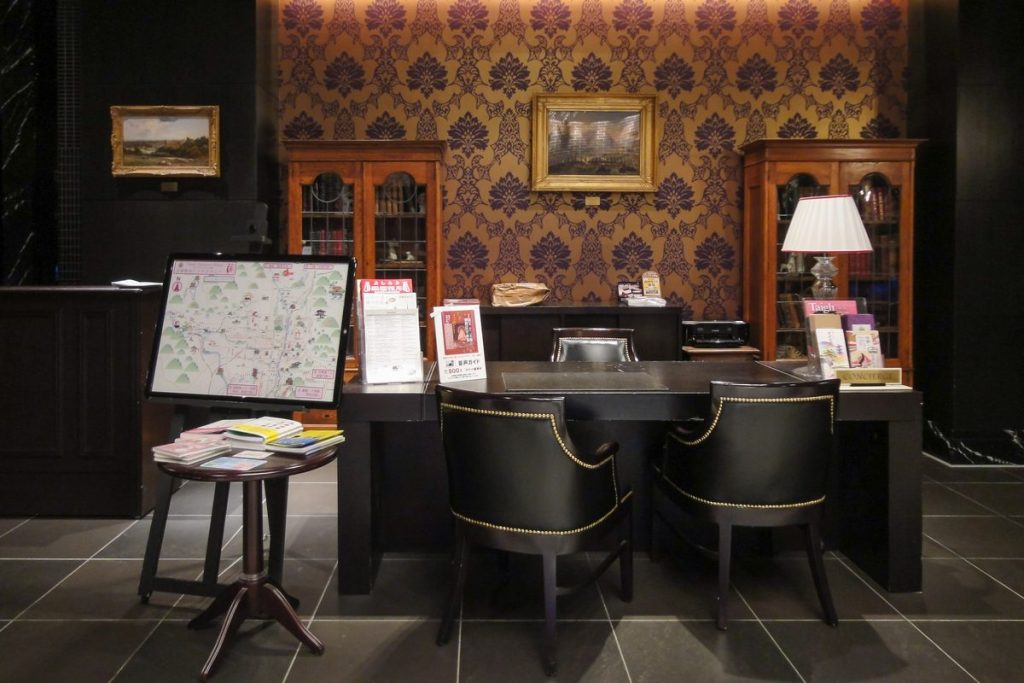
- 1. Check both hotels. Yamato says hotel-to-hotel sending works only if your current hotel’s front desk handles TA-Q-BIN and your next hotel can receive luggage at the front desk. It asks you to confirm both in advance (Yamato FAQ).
- 2. Time it. Yamato asks that your bag reach the next hotel at least one day before your stay. Its example: if you check in on February 1, it should arrive by January 31 (Yamato FAQ). With next-day delivery, that means sending it two days before you move. From Kyoto, Yamato lists Hokkaido, Okinawa and a few prefectures in northern Tohoku and southern Kyushu as taking about two days, so add a day for remote areas (Yamato).
- 3. Fill in the waybill at the counter. Facility counters do not take advance reservations: you pick up a waybill there and fill it in, or use Yamato’s smartphone waybill tool where the counter offers it (Yamato FAQ). Write the hotel’s name, address and phone number, and put your name exactly as it appears on the booking, with your check-in date, so the hotel can match the bag to you.
- 4. Pay. The fare depends on size and distance. Cash, credit cards, e-money and QR payments are accepted at Yamato offices and by drivers, and the cashless fare is a few yen lower (Yamato cashless fares, Japanese). Keep the receipt (the customer copy of the waybill) until the bag is in your room.
- Staying in an apartment or Airbnb? Yamato says you can take the bag to a convenience store such as 7-Eleven or FamilyMart, or to a Yamato office, instead (Yamato FAQ). Check that your destination can receive it, because there is no front desk to sign for it.
If two days without your bag will not work, ask your next hotel whether it will accept a bag that arrives on your check-in day. That is the hotel’s decision, not Yamato’s rule, so get a yes before you ship.
What it costs: Yamato fares by bag size
A size is the length plus width plus height in centimetres, and the weight limit can push a bag up a size; from Tokyo to Kyoto or Osaka, a large suitcase in size 160 or 180 costs ¥3,160 or ¥4,480. That is roughly a quarter to a third of the same-day price, so for a stopover trip the price is rarely the deciding factor. The timing is.
| Yamato size | Max total (L+W+H) | Max weight | Tokyo → Kyoto / Osaka | Within Kanto or within Kansai (e.g. Tokyo → Hakone, Kyoto → Osaka) |
|---|---|---|---|---|
| 120 | 120 cm | 15 kg | ¥2,170 | ¥2,040 |
| 140 | 140 cm | 20 kg | ¥2,780 | ¥2,630 |
| 160 | 160 cm | 25 kg | ¥3,160 | ¥3,020 |
| 180 | 180 cm | 30 kg | ¥4,480 | ¥3,680 |
| 200 | 200 cm | 30 kg | ¥5,410 | ¥4,470 |
- Measure, do not guess. Yamato bills by whichever is bigger, size or weight. A large checked suitcase is often close to 160 cm in total, and a 160 cm bag that weighs 26 kg is billed as size 180.
- Over 200 cm or 30 kg is refused. TA-Q-BIN does not take bags larger than size 200, and no single side may be longer than 170 cm (Yamato).
- Several bags to the same address: Yamato’s multiple-parcel discount does not apply to suitcases and travel bags of size 160 or larger (Yamato), so plan on the full fare for each big case.
Same-day delivery: when ¥13,200 is worth it
LUGGAGE EXPRESS, run by JTB with JR Central, carries bags by Shinkansen and delivers them between hotels in Tokyo and Kyoto or Osaka on the same day. It is worth it only when you cannot spare a night without your bag and both hotels are on its list. It costs about four times the next-day fare, so it suits one or two bags, not a family’s worth (LUGGAGE EXPRESS, JR Central).
| Service | Drop off by | Delivered by | Price per bag |
|---|---|---|---|
| Tokyo ↔ Kyoto/Osaka, Regular | 10:00 | 20:00 | ¥13,200 |
| Tokyo ↔ Kyoto/Osaka, Express | 10:00 | 18:00 | ¥16,500 |
| Tokyo ↔ Kyoto/Osaka, Late Check Out | 12:00 | 20:00 | ¥16,500 |
| Osaka ↔ Kyoto, Regional | 10:00 | 20:00 | ¥4,400 |
| Tokyo hotel → Haneda / Narita | 10:00 | 14:00 | ¥4,400 / ¥5,500 |
| Haneda / Narita → Tokyo hotel | 14:00 | 19:00 | ¥4,400 / ¥5,500 |
- Both ends must be on the list. Hotel drop-off and delivery work only at eligible hotels, and only if you have a reservation there. You choose the hotels on the booking screen. You can also drop off at the service counters in Tokyo, Kyoto and Shin-Osaka stations, but not for the Osaka–Kyoto route.
- Book and pay online by credit card before the drop-off time (at least 2 hours ahead for airport routes), then show the e-ticket at drop-off and pickup.
- Cancelling late costs the full price: the fee is 100% within 1 hour of the drop-off deadline (2 hours for airport routes).
- Accepted items: suitcases and bags that close securely, packaged strollers and cardboard boxes.
Yamato also offers same-day delivery from some counters, for example from Kyoto Yamato centres to hotels in parts of Kyoto, Osaka and Kobe, and from airports to central Tokyo. Areas, cut-off times and fees vary by counter, so check Yamato’s same-day page for the counter you plan to use.
Taking it on the Shinkansen instead
On the Tokaido, Sanyo and Kyushu Shinkansen, bags up to 160 cm in total travel free without a reservation. For 161 to 250 cm you must reserve a “seat with an oversized baggage area”, which costs nothing extra. So for a direct ride, the rule is less about money than about booking the right seat (JR Central).
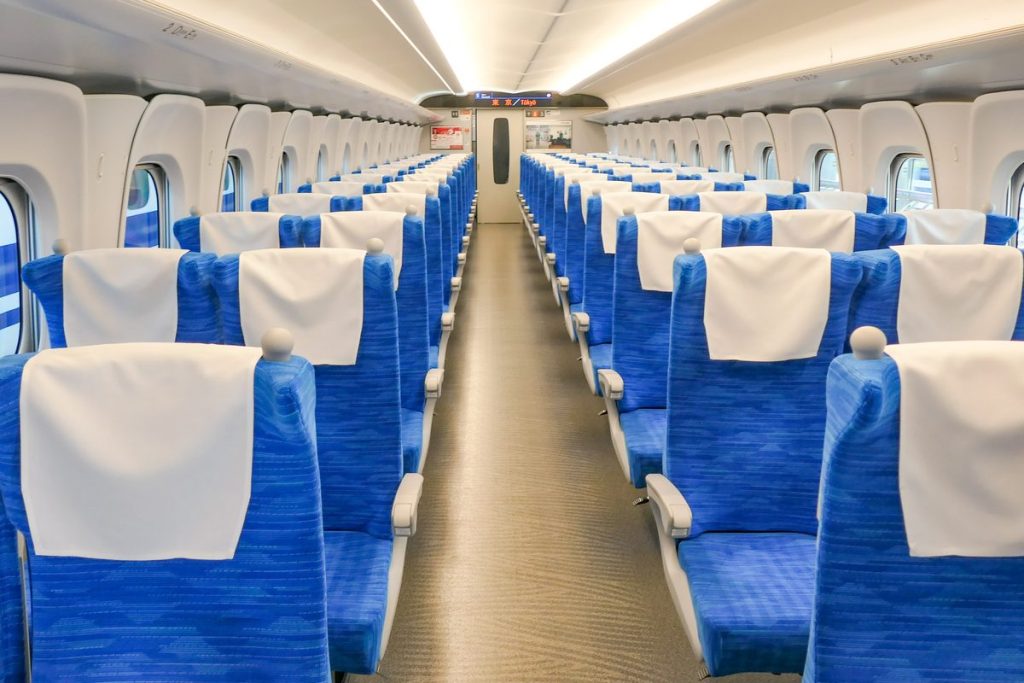
- Up to 160 cm: the overhead rack (about 42 cm deep), at your feet, or the baggage storage area on the deck. JR Central suggests that bags up to about 120 cm in total fit at your feet in an ordinary car (JR Central).
- 161–250 cm: reserve a seat with an oversized baggage area at a ticket office, a reserved-seat ticket machine, online, or through JAPAN RAIL PASS reservations. Without one, you pay a ¥1,000 fee and store the bag where the conductor tells you, and if the train is full you may be asked to take a later train (JR Central).
- Over 250 cm: not allowed on board at all. Forward it.
- Heavy bags: crew can help lift a bag onto the rack when their duties allow, but JR Central says this is not always possible while passengers are getting on or off.
Our Shinkansen luggage rules guide explains how to measure your bag and book the right seat, including with a JR Pass. If you are deciding between a pass and single tickets for this trip, see whether the JR Pass is worth it.
Sending bags to and from the airport
For your flight home, Yamato’s Airport TA-Q-BIN needs your bag two days before departure (three in some areas). On arrival day, the counters in the arrivals hall can send your bag to your hotel, and same-day delivery is possible only if you land early enough. On both ends, the deadline is the time you hand the bag over, not the time you land or take off (Yamato Airport TA-Q-BIN).
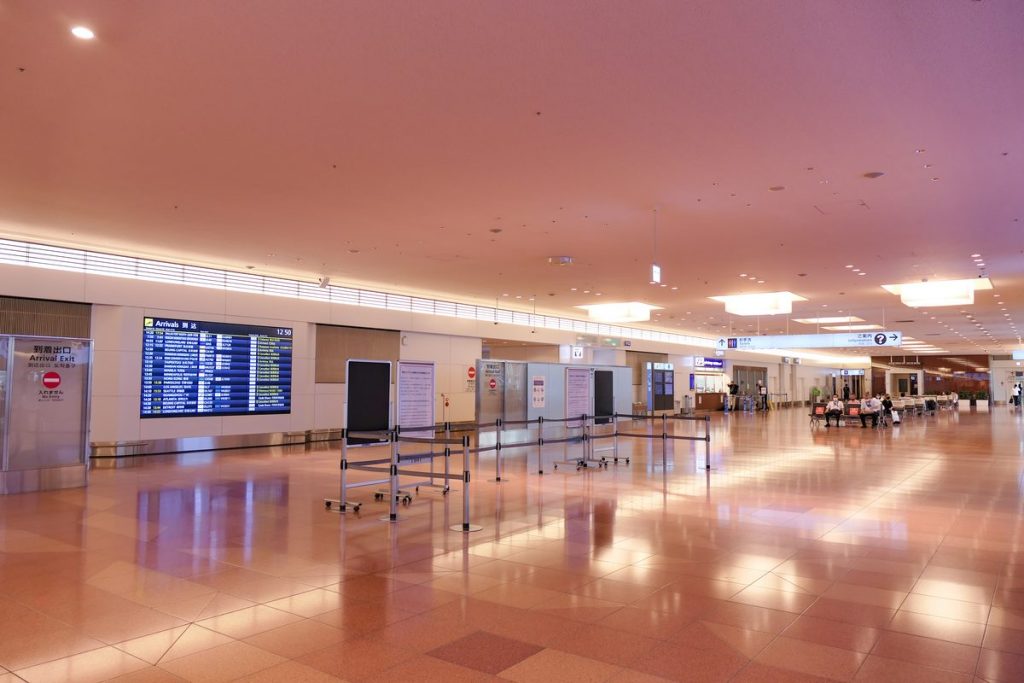
- Hotel → airport (Yamato): drop the bag off by the sending deadline two days before your flight (three days in some areas). Yamato delivers it to your departure airport by the day before, and you collect it at the partner counter on departure day. The price is the regular fare plus a ¥660 airport fee, which works out at about ¥3,700 for a size-160 bag from a Tokyo hotel to Narita or Haneda. Time-slot delivery is not available for airport deliveries (Yamato).
- Leaving from Kyoto: some Yamato centres in Kyoto, including the Kyoto Station Center, offer next-day delivery to Kansai Airport by 7:00 if you drop the bag off by 10:00 the day before. A size-160 bag costs ¥4,680. Opening days vary by centre (Yamato Kyoto).
- Same day from a Tokyo hotel: LUGGAGE EXPRESS takes bags from eligible Tokyo hotels by 10:00 and delivers them to Haneda (¥4,400) or Narita (¥5,500) by 14:00 (LUGGAGE EXPRESS). That suits an afternoon or evening flight when you do not want to give up your bag two days early.
- Arrival day: at Narita, Yamato, JAL ABC and Sagawa Express have counters on the arrivals floors of Terminals 1 and 2, before security. Yamato accepts same-day orders from about 6:30 to 10:30 for limited areas; JAL ABC (Terminal 1 South and Terminal 2) and Sagawa (Terminal 1 North and Terminal 2) take same-day orders until 14:00, Sagawa’s for 10 Tokyo wards and selected Urayasu hotels. Later in the day, plan on next-day delivery (Narita Airport). Yamato lists its counters at Haneda, Kansai and other airports on its airport counter page.
Shopping tax-free? From November 1, 2026, you claim the refund at the airport, and every tax-free item must be with you at the kiosk before you check in your bags. A bag forwarded to the airport is collected before check-in, so this still works: pick it up first, then go to the kiosk. Our tax-free refund guide explains the order of steps. For the arrival end, see Narita to Tokyo and Haneda to Tokyo.
What to keep out of a forwarded bag
Treat a forwarded suitcase like checked airline baggage you will not see for a day or two: valuables, documents, batteries and tonight’s essentials stay with you. Yamato will not accept some items at all, and its cover has a cap (Yamato prohibited items).
- Not accepted by Yamato: cash, credit and bank cards, passports and other hard-to-replace documents, products containing dangerous substances such as batteries, flammable items such as gas cylinders, and parcels whose contents total more than ¥300,000 (Yamato). Take power banks and spare batteries out of the bag.
- Liability is limited to ¥300,000 per bag (Yamato). Keep laptops, cameras, jewellery and medicines in your day bag.
- Pack a one- or two-night kit: clothes, chargers, toiletries and anything you need at your next stop. Getting this wrong is the most common reason a forwarding plan feels like a mistake.
- Payment: Yamato lists cashless payment at its own offices and with its drivers; at hotel desks and other agents, ask first and carry some yen. Our cash or card guide covers how much.
Before you forward: 6-point checklist
Five minutes of checking turns forwarding from a gamble into a plan.
- Measure each bag (length + width + height) and weigh it. Over 160 cm or 25 kg moves it to size 180. Over 200 cm or 30 kg cannot be forwarded.
- Ask both hotels: does the front desk send TA-Q-BIN, and will the next hotel hold a bag that arrives before you?
- Count back: Yamato asks that the bag arrive at least a day before check-in, so hand it over two days before you move, or three for remote areas.
- Pack a day bag for the nights apart from your suitcase, and keep passports, cards, cash, batteries and valuables with you.
- Same day instead? Check that both hotels are on the LUGGAGE EXPRESS list and book online before the drop-off time.
- Flying home? Send the bag to the airport two days ahead (from some Kyoto centres, by 10:00 the day before for Kansai Airport), and collect it before the tax-free kiosk and check-in.
More planning help: what to book before your trip, the arrival checklist and our IC card guide for getting around once your hands are free.
Frequently asked questions
How much does it cost to send luggage from Tokyo to Kyoto?
With Yamato’s TA-Q-BIN, ¥3,160 for a size-160 bag (up to 160 cm and 25 kg), ¥4,480 for size 180 and ¥5,410 for size 200, at the cash fare. Dropping the bag at a counter takes ¥100 off. Same-day delivery with LUGGAGE EXPRESS costs ¥13,200 per bag (Regular).
How long does luggage forwarding take in Japan?
Yamato’s standard service delivers the next day to almost all of Japan; from Kyoto, a few areas, including Hokkaido, Okinawa and some prefectures in northern Tohoku and southern Kyushu, take about two days. For hotel-to-hotel sending, Yamato asks that the bag arrive at least one day before your stay, so send it two days before you move.
Can I send my suitcase from the airport to my hotel?
Yes. Narita, Haneda, Kansai and other airports have delivery counters on the arrivals floor. Delivery is usually the next day; same-day delivery to central Tokyo is possible from some counters if you hand the bag over early enough, such as Yamato by about 10:30 or Sagawa by 14:00 at Narita.
Do I need to book luggage forwarding in advance?
Not for Yamato at hotel and facility counters: you fill in a waybill when you hand the bag over. LUGGAGE EXPRESS must be booked and paid online before the drop-off time. For the Shinkansen, reserve a seat with an oversized baggage area if your bag is 161–250 cm.
What is the maximum size for luggage forwarding?
Yamato TA-Q-BIN and LUGGAGE EXPRESS both take bags up to 200 cm (length + width + height) and 30 kg. On the Tokaido Shinkansen, you can carry bags up to 250 cm, but 161–250 cm needs a reserved oversized-baggage seat.
How we checked: official sources
- Yamato Transport: TA-Q-BIN (sizes, weights, liability, discounts)
- Yamato Transport: TA-Q-BIN fare table, cash (Japanese) and cashless fare table (Japanese)
- Yamato FAQ: sending luggage from one hotel to another and sending from a hotel, airport or tourist facility
- Yamato Transport: Airport TA-Q-BIN and airport pickup and sending counters
- Yamato Transport: baggage delivery and storage in Kyoto (next-day areas, Kansai Airport next-day delivery)
- Yamato Transport: Same-day Delivery Service and Hands-Free Travel
- Yamato Transport: dangerous and prohibited items
- LUGGAGE EXPRESS (JTB): plans, prices and conditions and JTB and JR Central launch release (October 30, 2025, PDF)
- JR Central: Shinkansen luggage information and oversized baggage seats
- Narita International Airport: baggage delivery counters
Last checked against these sources on October 8, 2026 (JST). Fares, cut-off times and eligible hotels change; confirm on the operator’s page before you send your bags.
Editorial information
- Written by
- Mahalohana
- Published
- Updated
- Last verified
Sources
- TA-Q-BIN — Yamato Transport
- 宅急便運賃一覧表:全国一覧(現金でのお支払い) — Yamato Transport
- 宅急便運賃一覧表:全国一覧(キャッシュレス決済) — Yamato Transport
- Is it possible to send luggage from one hotel to another? — Yamato Transport
- Sending baggage from a hotel, airport or tourist facility — Yamato Transport
- Airport TA-Q-BIN — Yamato Transport
- List of Pickup / Shipping Counters (airports) — Yamato Transport
- Baggage delivery and storage services (Kyoto) — Yamato Transport
- Same-day Delivery Service — Yamato Transport
- Dangerous and Prohibited Items — Yamato Transport
- LUGGAGE EXPRESS: Plans & Pricing — JTB Corp.
- JTB and JR Central to Launch Same-Day Baggage Delivery Service “LUGGAGE EXPRESS” (2025-10-30) — Central Japan Railway Company
- Luggage information (oversized baggage) — Central Japan Railway Company
- Baggage Delivery — Narita International Airport