
Photo: Ian G Shingler / Wikimedia Commons, CC BY-SA 4.0
Nara is the easiest day trip from Kyoto: two railway lines, under an hour, and no booking needed. The choice that matters is which line you take, because the two arrive at different stations, and that decides how much walking your day starts with. This guide compares the JR and Kintetsu routes in yen and minutes, shows when the Limited Express or a rail pass is worth paying for, and gives a realistic plan for the day, including the deer rules that catch first-time visitors out.
JR or Kintetsu: which train should you take?
Take Kintetsu unless you hold a JR Pass or want Fushimi Inari on the way. Kintetsu costs ¥40 more than JR, but Kintetsu-Nara Station sits at the edge of Nara Park, while JR Nara Station is about 1 km further west. On a day of temple walking, being dropped at the edge of the park is worth more than ¥40.
| Kyoto → Nara, adult, one way | Fare | Time | Arrives at |
|---|---|---|---|
| Kintetsu Express (no reservation) | ¥760 | About 45–50 min, often with a change at Yamato-Saidaiji | Kintetsu-Nara, at the edge of Nara Park |
| Kintetsu Limited Express (reserved seat) | ¥1,280 (¥760 fare + ¥520 charge) | About 35 min on a direct train | Kintetsu-Nara |
| JR Nara Line, Miyakoji Rapid | ¥720 | About 45 min | JR Nara, about 1 km west of the park |
For two people doing a round trip, the gap between the lines is small: ¥2,880 by JR and ¥3,040 by Kintetsu Express. Choose by where you want to start walking, not by price. The Kintetsu platforms are on the south (Hachijo) side of Kyoto Station, under the Shinkansen tracks, with their own Kintetsu gates. The JR Nara Line leaves from platforms 8 to 10 in the JR station.
If you are coming straight off the Shinkansen from Tokyo, Kintetsu puts the transfer from the Shinkansen to its Kyoto platforms at about 10 minutes, so you can be in Nara about an hour after arriving in Kyoto. Our guide to the Tokyo to Kyoto Shinkansen covers that leg.
Is the Kintetsu Limited Express worth ¥520 extra?
Only when it saves you a transfer or a standing ride. A direct Limited Express takes about 35 minutes instead of 45–50, and you get a guaranteed reserved seat for ¥520. On a weekday morning with a seat free on the Express, keep the ¥520. On an autumn weekend, or for the ride back when you are tired, it is money well spent.
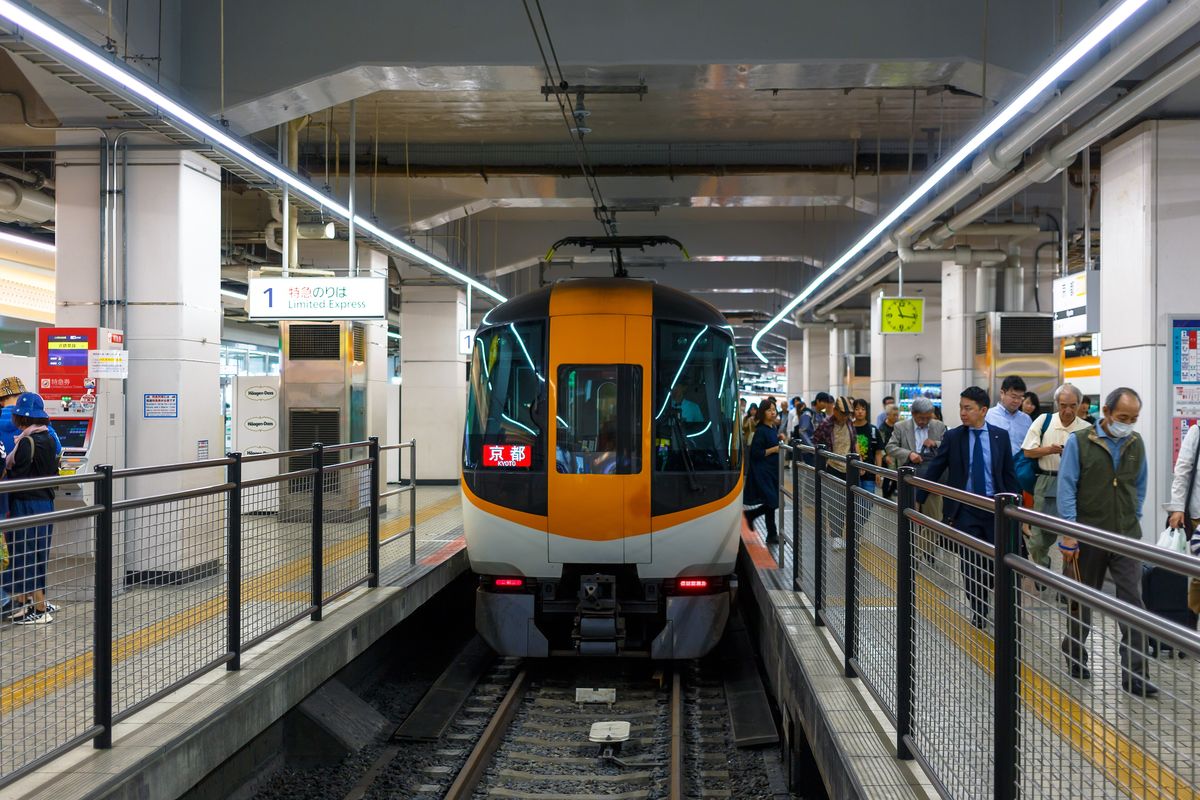
Photo: nobu3withfoxy / Wikimedia Commons, CC BY 2.0
Kintetsu’s rules are simple once you know them. The Limited Express charge is a separate ticket on top of the basic fare, and it is valid only for the train printed on it. You can pay the basic fare with an IC card, but the IC card does not cover the Limited Express charge. Buy that at a Limited Express ticket machine or counter at the station, or online on Kintetsu’s English booking site, which lets you pick a seat and change trains up to three times free. Seats can be booked from 10:30 a.m. one month before the travel date.
Some trains on the line cost more. The Shimakaze and the Aoniyoshi sightseeing train carry higher charges than a standard Limited Express, so check the price before you pick one. They are worth it only if the train itself is part of the plan. Also check whether your Limited Express runs straight to Kintetsu-Nara or makes you change at Yamato-Saidaiji. Kintetsu’s route search shows both.
When the JR Nara Line is the better choice
Take JR if you have a Japan Rail Pass, because the JR Nara Line is covered and Kintetsu is not. JR also wins if you want to see Fushimi Inari on the same day: since the March 14, 2026 timetable change, every rapid train stops at Inari Station. That makes Fushimi Inari in the early morning and Nara in the afternoon a single trip along one line.
Inari Station is right in front of the shrine’s entrance, so you can see the first stretch of torii gates, get back on a southbound rapid and reach Nara without returning to Kyoto Station. The cost is the walk at the other end: JR Nara Station is about 1 km west of Kintetsu-Nara, which adds roughly 15 minutes on foot each way, or a short city bus ride. Visit Nara lists about 41 minutes from Kyoto to Nara on the rapid. The Miyakoji Rapid picked up three extra stops in March 2026, so allow a few more minutes.
Buying a JR Pass just for this trip makes no sense, because the fare is ¥720. Whether the pass pays off for your whole trip is a separate calculation, covered in our JR Pass break-even guide.
IC card or the Kintetsu Rail Pass?
For a simple Kyoto–Nara round trip, use an IC card. The KINTETSU RAIL PASS 1day costs ¥1,900, only ¥380 more than the ¥1,520 round trip on the Express, and you only gain if you also ride buses or other Kintetsu lines that day.
The 1-day pass covers Kintetsu between Kyoto and Tsutsui and between Osaka-Namba and Kintetsu-Nara, plus Nara Kotsu buses around Nara Park, Nishinokyo and Horyuji. It earns its price if you add a bus trip out to the Nishinokyo temples or Horyuji, or if you finish the day in Osaka rather than Kyoto. It does not include the Limited Express charge. If you just walk around Nara Park, the IC card you already use in Kyoto is cheaper. Our IC card guide explains which card to get.
A realistic Nara day plan from Kyoto
Leave Kyoto by about 9:00 and plan to be on a train back by mid-afternoon. Kofuku-ji, the deer, Todai-ji and Kasuga Taisha fit into five to six hours on foot. All four are in or next to Nara Park, so you don’t need buses once you are there.
- About 9:00: leave Kyoto. Take the Kintetsu Express or Limited Express to Kintetsu-Nara and tap your IC card at the Kintetsu gates. On the JR plan, see Fushimi Inari first and catch a rapid from Inari later in the morning.
- Kofuku-ji and the park edge. From Kintetsu-Nara, the Kofuku-ji temple grounds are a few minutes’ walk uphill. The deer start appearing here.
- Todai-ji. About 20 minutes’ walk east from Kintetsu-Nara. The Great Buddha Hall opens at 7:30 a.m. from April to October and at 8:00 a.m. from November to March. Admission is ¥800 for adults.
- Kasuga Taisha. Walk through the lantern-lined paths east of the park. The forest paths are shaded and usually quieter than the area around Todai-ji.
- Lunch and back. Eat in Naramachi, the old merchant quarter south of the park, then walk back to Kintetsu-Nara or JR Nara. Book a Limited Express for the return if you want a guaranteed seat.
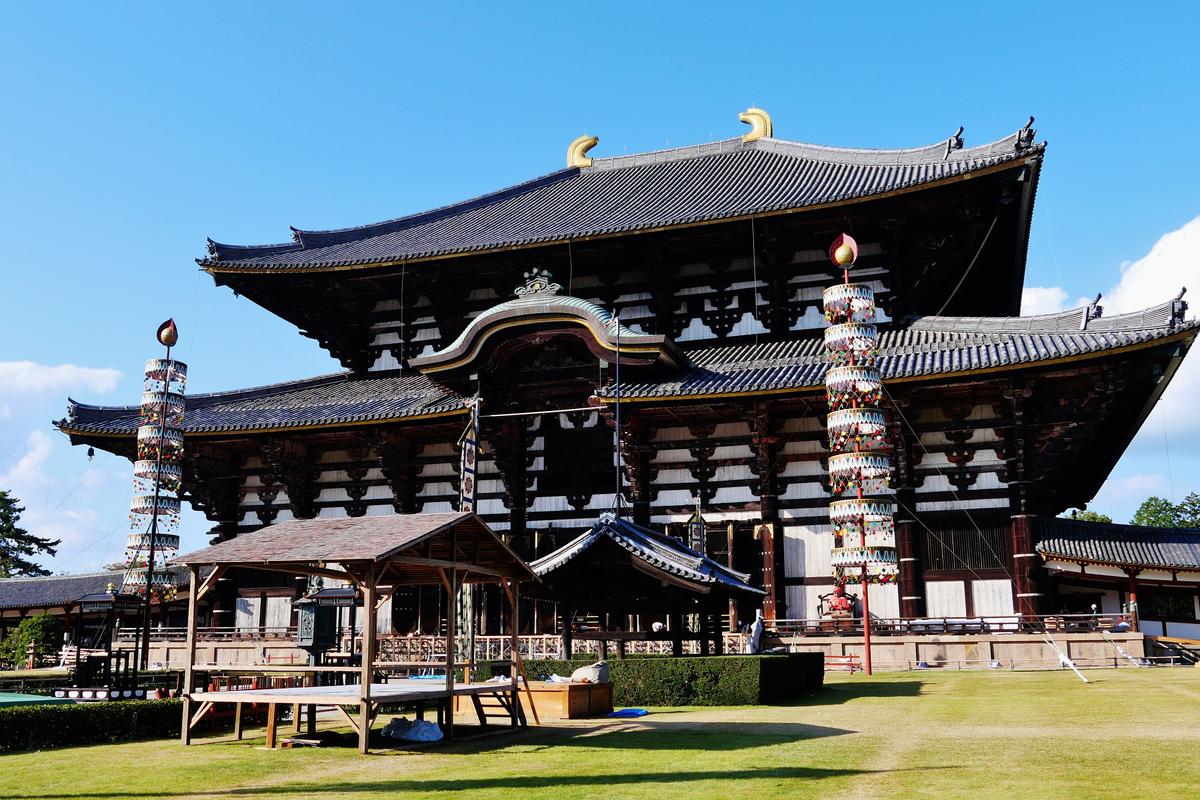
Photo: Zairon / Wikimedia Commons, CC BY 4.0
The order matters more than the exact times. Todai-ji draws the biggest crowds and closes earliest, so see it in the morning. Kasuga Taisha and Naramachi work well in the afternoon, and you can leave them out if you run short of time or energy.
The deer: what first-time visitors get wrong
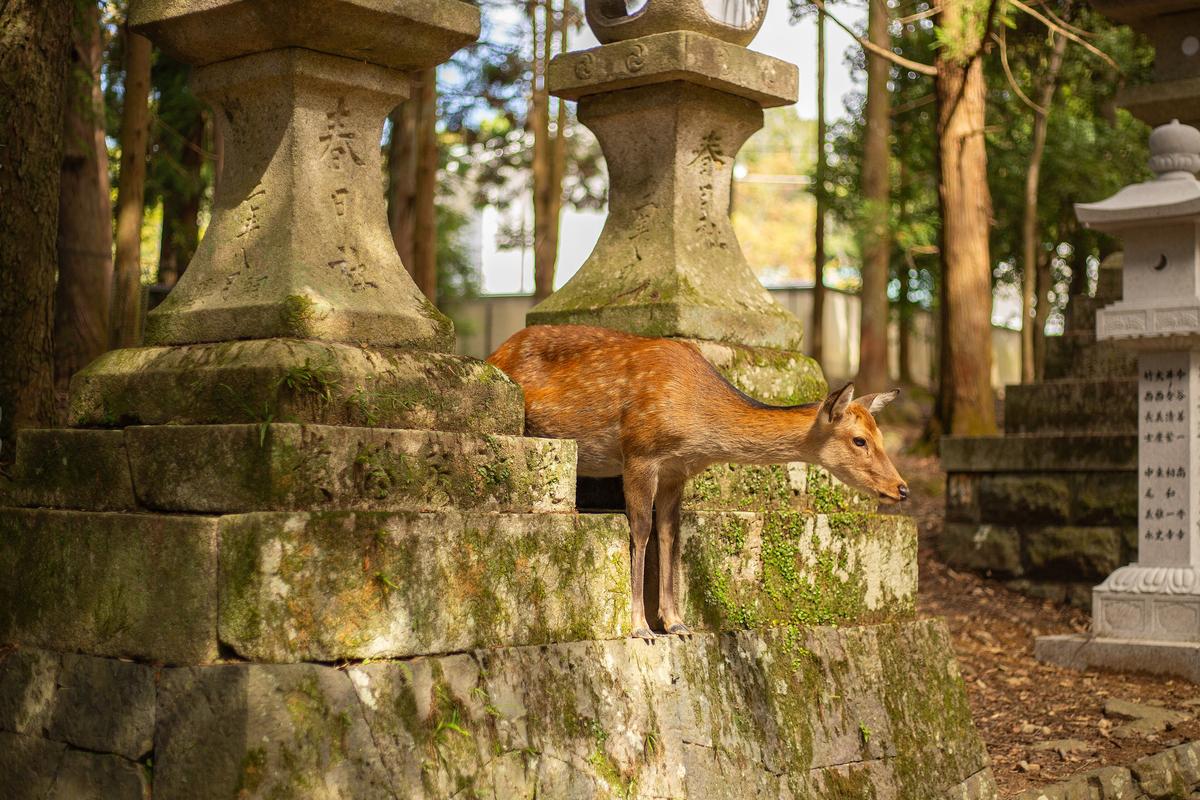
The deer are wild animals, not a petting zoo. Feed them only the official deer crackers (shika senbei, about ¥200 for a pack of 10), give them one at a time, and show your empty hands when you’re done. Nara’s tourism association warns that males can turn aggressive in autumn, which is exactly when many visitors come.
- Don’t tease. Holding a cracker where a deer can see it but not reach it is the usual way people get bitten or butted.
- Hide paper and plastic. Deer will try to eat maps, leaflets and plastic bags. Keep them in your bag, not in your hand.
- No other food. Bread, sweets, vegetables and leftovers harm the deer. The crackers are made for them and contain no sugar.
- Keep a distance from stags in autumn. Nara Prefecture asks visitors not to approach males during the mating season, and not to touch antlers or ride or hold the deer.
- With children, feed the deer together, and let go of the crackers quickly if several deer crowd in.
When a Nara day trip isn’t worth it
Skip Nara, or save it for another trip, if you have fewer than three full days in Kyoto or can’t leave until after lunch. Nara is easy to reach, but rushing it costs you the parts that make it worthwhile.
- Starting after 1:00 p.m.: Todai-ji’s Great Buddha Hall closes at 5:30 p.m. (5:00 p.m. from November). You would see it in a hurry and skip the rest.
- Staying in Osaka: don’t route through Kyoto. Kintetsu runs directly from Osaka-Namba to Kintetsu-Nara in about 40 minutes.
- Limited Express both ways when an Express leaves in five minutes: you save about 10–15 minutes for ¥520 each way. Pay it for comfort, not for speed.
- The Kintetsu Rail Pass for a plain round trip: ¥380 more than paying as you go, with nothing extra in return.
- Bringing luggage: a suitcase is hard work on the park’s gravel paths. If you are changing hotels that day, forward your luggage rather than carrying it around Nara.
Frequently asked questions
How much is the train from Kyoto to Nara?
¥760 one way for an adult on a Kintetsu Express, ¥1,280 on a Kintetsu Limited Express, or ¥720 on the JR Nara Line. Children aged 6 to 11 pay about half.
Can I use Suica or ICOCA from Kyoto to Nara?
Yes, on both JR and Kintetsu, for the basic fare. A Kintetsu Limited Express also needs a separate Limited Express ticket for the specific train.
Is the Japan Rail Pass valid from Kyoto to Nara?
Yes, on the JR Nara Line to JR Nara Station. It is not valid on Kintetsu.
Do I need to book the train in advance?
No, for JR trains and the Kintetsu Express. Just tap in with an IC card. Only the Kintetsu Limited Express needs a reserved-seat ticket, and on most days you can buy one at the station.
Can I visit Fushimi Inari and Nara on the same day?
Yes. Take the JR Nara Line to Inari Station early in the morning, walk the lower torii gates, then continue south to Nara on a rapid. All rapid trains stop at Inari since March 2026.
How we checked: official sources
- Kintetsu: Route/Fare Search (Kyoto → Kintetsu-Nara fares and times) and Kyoto–Kintetsu-Nara fare and Limited Express charge table (Japanese, PDF)
- Kintetsu: Limited Express tickets (reserved seats, buying, changes)
- Kintetsu: KINTETSU RAIL PASS 1day (price and zones)
- JR West: Keihanshin fare table, Kyoto–Nara (Japanese, PDF) and March 14, 2026 timetable change: rapid stops at Inari (Japanese, PDF)
- Visit Nara (Nara Prefecture): travel times to Nara
- Todai-ji: opening hours and admission and access; Nara City Tourism Association: the deer of Nara Park
All checked October 13, 2026. Fares and timetables can change, so confirm the train and price on the operator’s site before you travel.
Editorial information
- Written by
- Mahalohana
- Published
- Updated
- Last verified